Gangnam Eye & Eye Revision Surgery Specialist · Personalized 1:1 Care


First-Time Eye Surgery · Needs Clinic Confirmation
Ptosis Correction
Ptosis is a condition in which the upper eyelid droops lower than its natural resting position due to weakness, stretching, or detachment of the levator muscle — the primary muscle responsible for lifting the upper eyelid.
Schedule a Consultation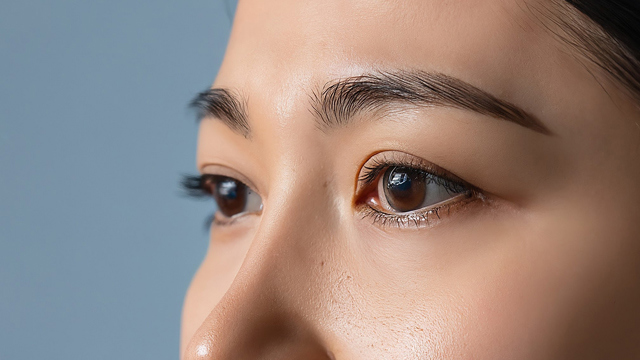
What Is Ptosis and How Is It Corrected?
Ptosis is a condition in which the upper eyelid droops lower than its natural resting position due to weakness, stretching, or detachment of the levator muscle — the primary muscle responsible for lifting the upper eyelid. In a normally functioning eyelid, the levator muscle contracts to raise the lid to a height that exposes approximately 80–90% of the iris, creating an open, alert eye appearance. When levator function is compromised, the eyelid sits lower than this natural position — covering a portion of the pupil, reducing iris exposure, and giving the eye a persistently heavy, tired, or sleepy appearance.
Ptosis can range from mild — where the eyelid droops only slightly and the concern is primarily aesthetic — to more pronounced, where the drooping is significant enough to partially obstruct the upper visual field and cause habitual compensatory behaviors such as raising the eyebrows or tilting the head back to see clearly. In many patients, ptosis affects one eye more than the other, creating a visible asymmetry that draws attention and is difficult to address through non-surgical means.
Surgical ptosis correction addresses the condition at its anatomical source — the levator muscle. The levator aponeurosis, the fibrous extension of the levator muscle that attaches to the upper eyelid, is either tightened or reattached to restore the appropriate degree of eyelid elevation. The degree of correction is planned individually based on the patient's levator function measurement, the amount of drooping, and the desired eyelid height — assessed in relation to the fellow eye to ensure bilateral symmetry is achieved rather than simply improving the more affected side in isolation.
At Afternoon Plastic Surgery Clinic, ptosis correction is designed as a proportionally guided procedure. Before any surgical plan is finalized, Dr. Karam Kim assesses the patient's iris exposure, eyelid height, levator function, brow position, and inter-eye symmetry against the full facial structure — using the clinic's established proportional design standards to determine the most natural and appropriate degree of correction for the individual. The result is a ptosis correction that restores natural eyelid opening rather than simply lifting the lid to a generically defined height.
Who Needs Ptosis Correction Surgery?
Ptosis correction is recommended for patients who experience upper eyelid drooping that affects either the appearance or function of the eye — or both. Because ptosis exists on a spectrum from mild to pronounced, the decision to pursue surgical correction is based on a combination of the degree of drooping, the functional impact on vision, the aesthetic concern, and the patient's individual goals. A thorough consultation with Dr. Karam Kim is the recommended first step for any patient who suspects they may have ptosis.
Ideal candidates for ptosis correction surgery include:
Patients in their 20s–50s whose upper eyelid droops lower than the natural resting position, giving a persistently tired or sleepy eye appearance
Those with visible eyelid asymmetry where one eyelid droops noticeably more than the other, creating an imbalanced facial appearance
Patients whose upper eyelid covers a portion of the pupil at rest, reducing iris exposure below the natural 80–90% range
Individuals who habitually raise their eyebrows or tilt their head to compensate for restricted upper visual field caused by the drooping eyelid
Those experiencing visual fatigue or discomfort associated with the effort of keeping drooping eyelids sufficiently raised throughout the day
Patients who want to address ptosis and create a double eyelid fold simultaneously in a single combined procedure
Those seeking a natural, appropriately elevated eyelid that opens to a height suited to their facial proportions rather than an overdone or exaggerated result
Male patients whose ptosis creates a heavy, tired appearance inconsistent with their natural facial character and who want a correction designed specifically around male facial anatomy
If you are unsure whether your eyelid drooping meets the threshold for surgical correction, a direct consultation with Dr. Karam Kim will provide a clear, anatomy-based assessment and an honest recommendation tailored to your individual eyelid function and goals.
Meet the Specialist in Ptosis Correction: Dr. Karam Kim

Dr. Karam Kim Director & Board-Certified Plastic Surgeon
Dr. Karam Kim has devoted his entire surgical career to eye surgery — making ptosis correction not a peripheral procedure in a broad practice but a central clinical focus that he has developed and refined across more than a decade of concentrated eyelid-specific experience. As the founding director and sole operating surgeon at Afternoon Plastic Surgery Clinic, he personally conducts every consultation, designs every surgical plan, and performs every procedure — assessing not just the anatomical measurements of the eyelid but the patient's natural expressions, habitual movements, and the subtle bilateral differences that shape how the eyelids behave in daily life.
His professional credentials reflect both clinical depth and sustained academic engagement:
Former Director, Make Plastic Surgery Clinic
Former Director, Noblesse Plastic Surgery Clinic
Life Member, Korean Society of Plastic and Reconstructive Surgeons (KSPRS)
Regular Member, Korean Society of Aesthetic Plastic Surgery (KSAPS)
Regular Member, Korean Society of Craniofacial Plastic & Reconstructive Surgery
Member, Eye Plastic Surgery Research Group, KSPS
Regular Member, KSIPS Rhinoplasty, Breast Surgery & Minimally Invasive Surgery Research Societies
Regular Member, Korean Society for Stem Cell Treatment
Appointed Consultant, Naver Knowledge IN — Health & Medicine
Ptosis correction requires the surgeon to work at the level of the levator muscle — a structure whose precise adjustment determines the functional and aesthetic outcome of the procedure in ways that surface-level techniques cannot address. Dr. Kim's philosophy — that the surgeon's role is to find and realize the most beautiful version of what is already naturally there — applies with particular force to ptosis correction, where the goal is not to create an artificial lift but to restore the natural eyelid elevation that the weakened levator muscle can no longer sustain on its own.
Ptosis Correction: Treatment Areas and Expected Improvements

Afternoon Plastic Surgery Clinic's approach to ptosis correction addresses the full range of functional and aesthetic concerns associated with upper eyelid drooping, with treatment tailored to the specific levator function measurement, degree of asymmetry, and proportional design goals of each individual patient.
Upper Eyelid — Levator Aponeurosis Tightening and Reattachment: The primary surgical correction in ptosis surgery involves tightening or reattaching the levator aponeurosis to restore appropriate eyelid elevation. The degree of tightening is calculated individually based on the patient's levator function and the desired correction height — assessed against the fellow eye and the patient's overall facial proportions. At Afternoon, the target correction height is determined during the pre-surgical design phase using the clinic's established proportional standards: iris exposure of approximately 80–90%, eyelid height consistent with natural facial balance, and bilateral symmetry verified in the upright seated position during surgery. Patients typically experience a progressive improvement in eyelid opening as post-operative swelling resolves, with the corrected eyelid settling into its natural elevated position as healing stabilizes over the weeks following surgery.
Upper Eyelid — Bilateral Symmetry Restoration: In patients where ptosis affects one eye more significantly than the other — creating visible asymmetry — the correction is designed to restore bilateral balance rather than simply improving the more drooping side in isolation. Dr. Kim assesses both eyelids during the pre-surgical consultation, evaluating the degree of levator function difference and the natural resting height of each lid, before designing a correction that brings both eyes to a symmetrical and proportionate elevation. Intraoperative seated assessment allows real-time bilateral verification before the procedure concludes — ensuring that any asymmetry identified during surgery is corrected immediately on the table.
Combined Ptosis Correction and Double Eyelid Surgery: For patients who wish to address ptosis and create a double eyelid fold in the same surgical session, combined ptosis correction and double eyelid surgery is available. The ptosis correction addresses the levator function and eyelid elevation, while the double eyelid component creates a crease that is proportionate to the corrected eyelid height — designed as a unified plan rather than two separate procedures performed simultaneously. This combined approach avoids the need for sequential surgeries and allows the fold height and crease design to be optimized in relation to the corrected eyelid position from the outset.
Functional Improvement — Visual Field and Eye Comfort: In patients with more pronounced ptosis where the drooping eyelid partially obstructs the upper visual field, successful ptosis correction restores the natural visual access that the weakened levator muscle was preventing. Patients who had been habitually raising their eyebrows or tilting their heads to compensate often report a reduction in associated muscle fatigue and visual discomfort as the corrected eyelid maintains its elevated position without the compensatory effort previously required.
Individual results vary depending on the degree of ptosis, levator function strength, skin condition, healing response, and whether the correction is unilateral or bilateral. No surgical outcome can be guaranteed, and realistic expectations are established transparently during the pre-operative consultation with Dr. Kim.
The Ptosis Correction Process at Afternoon Plastic Surgery Clinic
The ptosis correction process at Afternoon is structured around proportional precision — from the initial levator function assessment through the pre-surgical design to the intraoperative symmetry check. Every step is performed by Dr. Karam Kim personally, with no delegation at any stage.
Step 1 — Personal Consultation and Proportional Assessment
Every patient consults directly with Dr. Kim, who assesses eyelid height, iris exposure, levator function, brow position, bilateral symmetry, and the degree and pattern of drooping against the patient's full facial structure. Natural expressions, habitual compensatory movements, and subtle bilateral asymmetries are observed and factored into the surgical plan. The appropriate degree of correction is determined at this stage — not as a generic lift target but as a proportionally designed elevation suited to the individual patient's face. International patients may initiate this process remotely by submitting photographs for preliminary assessment before travel is arranged.
Step 2 — Individualized Surgical Design and Planning
Following the assessment, Dr. Kim develops a precise surgical plan specifying the levator correction approach, degree of tightening, crease design where applicable, and incision placement. On the day of surgery, the design is marked on the eyelid and reviewed with the patient before the procedure begins. The design phase at Afternoon is treated as a clinical priority equal to the surgery itself — with up to 20 minutes dedicated to pre-surgical marking and planning regardless of the procedure's surgical duration. Eye shape options discussed during design include:
Innocent Eyes — Naturally round, pure, and refined
Elegant Eyes — Slightly lifted corners for a sophisticated look
Cute Eyes — Larger, puppy-like eyes with a youthful quality
Step 3 — Surgery and Intraoperative Symmetry Verification
During surgery, the levator aponeurosis is tightened or reattached to the appropriate degree according to the pre-surgical plan. At intervals during the procedure, the patient is asked to sit upright so that Dr. Kim can assess eyelid height, fold symmetry, and overall eye appearance from a natural angle — making fine adjustments to any areas that require additional refinement before the procedure concludes. Any asymmetry identified during this intraoperative assessment is corrected immediately, ensuring the patient leaves the clinic with the most balanced result achievable at the time of surgery.
Step 4 — Post-Operative Care and Recovery
Patients are discharged the same day following surgery. Mild swelling and bruising are expected in the first few days and typically resolve within the approximately 5-day recovery window. Dr. Kim personally manages post-operative follow-up, providing individualized guidance through the recovery period. Stitches are removed at 5–7 days post-procedure. Any asymmetry identified during the post-operative period is addressed and corrected within two weeks — a standing commitment made by Afternoon Plastic Surgery Clinic to every patient.
Results, Safety, and Longevity of Ptosis Correction Surgery
Ptosis correction performed through levator aponeurosis tightening or reattachment is designed to produce a long-lasting improvement in eyelid elevation — restoring the natural opening height that the weakened levator muscle was no longer able to maintain. Because the correction addresses the structural source of the drooping rather than compensating for it at the surface level, the improved eyelid position is intended to be durable as the surrounding tissues heal and stabilize.
The safety profile of ptosis correction at Afternoon reflects the clinic's deliberate, unhurried surgical philosophy. With a strict limit of two surgeries per day, Dr. Kim operates without time pressure — giving each levator correction the complete precision and intraoperative assessment time it requires. The clinic's minimal anesthesia protocol is designed to reduce post-operative swelling and bruising, supporting a more comfortable recovery while maintaining the patient's ability to cooperate with the intraoperative seated symmetry check.
As with any surgical procedure, possible side effects following ptosis correction include temporary swelling, bruising, mild discomfort, and a low risk of infection or healing irregularity. In some cases, a period of mild lagophthalmos — incomplete eyelid closure — may be present in the immediate post-operative period as the tissues adjust to the corrected levator position; this typically resolves as healing progresses. Serious complications are rare but remain possible, and all risks are discussed openly during the pre-operative consultation. Afternoon does not make guarantees about specific outcomes; the clinic's commitment is to a standard of proportionally guided, levator-level precision and individualized care that gives every patient the strongest possible foundation for a naturally elevated and symmetrically balanced result.
Why Choose Afternoon Plastic Surgery Clinic for Ptosis Correction?
Ptosis correction is a procedure that demands precision at the level of the levator muscle — and that level of precision is most reliably developed through years of focused, eyelid-specific surgical experience. Afternoon Plastic Surgery Clinic's near-exclusive concentration on eye surgery means that ptosis correction is one of the clinic's most clinically developed areas of expertise, approached with the proportional design methodology, intraoperative verification standards, and personal surgical attention that the procedure genuinely requires.
With 13 years of experience and more than 10,000 eye surgery cases, Dr. Karam Kim brings to every ptosis correction a depth of levator-specific understanding that generalist aesthetic practices built around broader menus of procedures cannot replicate. His proportional design approach — assessing ideal iris exposure, eyelid height, and bilateral balance against the patient's full facial structure before any surgical plan is finalized — ensures that the correction is designed to look natural on the individual patient, not merely to achieve a technically defined lift target.
Why patients choose Afternoon for ptosis correction:
13+ years and 10,000+ eye cases — concentrated entirely in eyelid surgery
Dr. Karam Kim performs every surgery personally — no delegation at any stage
Proportional design standards applied to every case — iris exposure, eyelid height, and bilateral symmetry assessed against the full face
Intraoperative sitting check — real-time levator correction verification in natural upright position
Post-operative asymmetry corrected within 2 weeks — a standing clinic commitment to every patient
Patient Experiences: Ptosis Correction at Afternoon
First-Time Surgery Patient, 20s — Bilateral Mild Ptosis With Tired Appearance
A patient in her mid-twenties presented with bilateral mild ptosis that gave her eyes a persistently heavy and tired appearance, despite feeling alert. Following a thorough proportional assessment with Dr. Kim, a bilateral ptosis correction was planned with crease height and levator tightening degree designed individually for each eye. During surgery, the intraoperative sitting check confirmed bilateral symmetry before the procedure concluded. As post-operative swelling resolved, the eyelids settled into a naturally elevated and symmetrically balanced position that significantly improved the overall openness of the eye appearance.
First-Time Surgery Patient, 40s — Unilateral Ptosis With Visible Asymmetry (Male)
A male patient in his mid-forties presented with unilateral mild ptosis causing visible asymmetry between the two eyes, combined with early excess skin on the upper eyelid. Dr. Kim assessed levator function and skin redundancy on both sides, designing a combined correction that addressed the drooping and skin redundancy while maintaining a natural, masculine eyelid appearance. The intraoperative seated assessment confirmed bilateral symmetry before the procedure concluded, and the patient reported both improved visual comfort and satisfaction with the balanced, naturally masculine result.
Ready to Correct Drooping Eyelids? Start With a Consultation at Afternoon
If upper eyelid drooping is affecting the appearance of your eyes, creating persistent asymmetry, or causing functional discomfort that impacts your daily life, ptosis correction at Afternoon Plastic Surgery Clinic offers a proportionally guided, levator-level path to naturally elevated eyelids designed specifically for your face. Dr. Karam Kim will personally assess your levator function, evaluate your eyelid height and bilateral symmetry against your full facial proportions, and design a correction plan that restores natural eyelid opening — not a generic lift, but a result built around your individual anatomy and goals.
[Book Your Ptosis Correction Consultation Today]
Take the first step toward eyelids that open naturally, sit symmetrically, and reflect the alert, balanced eye appearance that ptosis has been preventing. Contact the Afternoon Plastic Surgery Clinic team to arrange your direct consultation with Dr. Karam Kim — and discover what proportionally guided, levator-level precision can achieve for you. International patients are welcome to submit photographs for remote preliminary assessment before making travel arrangements.
Other Services
Explore additional treatments offered by our specialists.

Male Eye Surgery
Male eye surgery encompasses the same range of primary eyelid procedures available to female patients — double eyelid creation, ptosis correction, sagging skin removal, epicanthoplasty, and under-eye correction — but approaches each with a design philosophy and surgical
Learn More

Canthoplasty
Canthoplasty is a surgical procedure that modifies the inner corner, outer corner, or both corners of the eye to adjust the apparent width, shape, tilt, or definition of the eye.
Learn More

Skin Booster
A skin booster is an injectable aesthetic treatment that delivers moisturizing and hydrating agents — typically hyaluronic acid-based formulations — directly into the dermis, the deeper layer of the skin where cellular hydration, collagen support, and skin quality are determined.
Learn More