Gangnam Eye & Eye Revision Surgery Specialist · Personalized 1:1 Care


Medical Guide
Afternoon's Two-Week Post-Op Asymmetry Correction Policy
How Afternoon Plastic Surgery Clinic in Seoul addresses post-operative eye asymmetry within roughly two weeks as a follow-up policy, and not a guarantee.
Schedule a ConsultationHow Afternoon Handles Post-Operative Asymmetry: The Two-Week Correction Policy
Medically reviewed by Dr. Karam Kim*, Korean Board-Certified Plastic Surgeon*
Afternoon Plastic Surgery Clinic follows a documented policy: if a genuine post-operative asymmetry is identified during follow-up, it is addressed within approximately two weeks when correction is needed. It is important to understand that this is a commitment to structured follow-up and revision when appropriate, not a promise of a specific result. Some visible unevenness in the first days after eye surgery is a normal part of healing, and the clinic's follow-up is designed to tell ordinary swelling apart from a true asymmetry that may warrant intervention. Results vary from person to person, and any corrective procedure itself carries surgical risk.
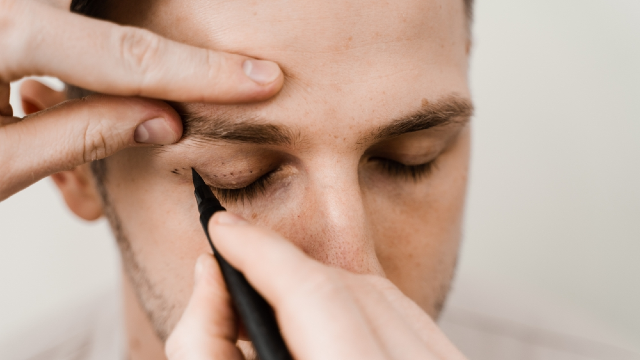
Why Some Early Asymmetry After Eye Surgery Is Normal
In the days immediately after eyelid or eye-shape surgery, the two eyes almost never look perfectly matched. This is expected. Surgery involves controlled trauma to delicate tissue, and the body responds with swelling (edema) and sometimes bruising. Because the left and right sides do not always swell at the same rate or resolve on the same timeline, one eye can appear more open, more closed, higher, or puffier than the other for a period after the operation.
This kind of temporary difference is not the same thing as a structural asymmetry in the final result. It is a stage in the recovery process. At Afternoon, the documented recovery pattern is that patients are discharged the same day, swelling and bruising generally improve over roughly five days, and stitches are typically removed at five to seven days. During this window, appearance can change noticeably from day to day, which is one reason it is difficult to judge a final outcome early.
It also helps to remember that most people have some degree of natural asymmetry in their faces before any surgery. The two sides of the eyes, brows, and surrounding features are rarely identical to begin with. Surgery works with the anatomy a person already has, so a realistic goal is balance and harmony rather than a mirror-image match. This is a point worth discussing openly during consultation, and you can raise questions about it directly through the clinic's contact page.
Swelling Versus a True Asymmetry: What the Difference Means
The central challenge in the early post-operative period is distinguishing swelling that will settle on its own from an asymmetry that reflects the underlying surgical result. These two situations call for very different responses. Swelling generally does not need a procedure; it needs time, appropriate aftercare, and monitoring. A true asymmetry, on the other hand, may be a candidate for correction once healing has progressed enough to evaluate it fairly.
Several clues help a surgeon tell them apart. Swelling tends to be diffuse, changes over hours and days, is often more pronounced in the morning, and gradually decreases as the tissue recovers. It frequently affects both sides, even if unevenly. A structural asymmetry, by contrast, tends to remain consistent as the swelling resolves and may relate to factors such as crease height, fold depth, the position of the eyelid margin, or the amount of tissue on each side.
Because these signs overlap early on, the responsible approach is careful observation over time rather than a rushed conclusion. Judging a result while significant swelling is still present risks both false alarms and premature intervention. This is why a clinic's follow-up schedule matters so much: it creates defined checkpoints at which a trained surgeon, not the patient alone, assesses what is happening. General patient-education resources from bodies such as the American Society of Plastic Surgeons similarly emphasize that eyelid surgery results settle over weeks, and that swelling and bruising are expected parts of recovery.
What the Two-Week Correction Policy Actually Is
Afternoon's documented policy is that any post-operative asymmetry is corrected within approximately two weeks if it is needed. In practical terms, this is a follow-up commitment. It means the clinic sets aside the early recovery period to monitor healing, and if a genuine asymmetry is identified that warrants a corrective step, that step is planned and carried out within that early timeframe rather than being deferred indefinitely.
There are sensible clinical reasons for anchoring this policy to the early window. Certain minor adjustments can be more straightforward before tissues have fully matured and scar tissue has consolidated. Acting within a defined period also gives patients a clear expectation of when concerns will be evaluated and, if appropriate, addressed. For patients traveling from abroad, having a structured early follow-up plan is particularly relevant, because it aligns any potential adjustment with a period when in-person care in Seoul is still practical.
It is equally important to be precise about what the policy does not mean. It does not mean that every difference between the two eyes in the first two weeks will be treated as a problem to fix. Much of what patients notice early is swelling that resolves on its own. It also does not mean a second procedure is inevitable or expected. Correction is reserved for situations where the surgeon judges it appropriate after evaluation. You can learn more about the clinic's overall approach on the Afternoon Plastic Surgery Clinic website.
How Afternoon's Follow-Up Identifies and Addresses Asymmetry

At Afternoon, Dr. Karam Kim personally performs each consultation, the surgical design, the procedure, and the follow-up. Continuity of care from the same surgeon who performed the operation is helpful when evaluating early appearance, because that surgeon already knows the starting anatomy, the plan that was used, and what was intended for each side. This makes it easier to interpret whether an early difference reflects swelling or something structural.
The clinic's documented care model includes a personalized consultation with detailed assessment of eyelid anatomy and facial structure, and up to roughly twenty minutes of individualized eye design before surgery. That same attention to individual anatomy carries into the follow-up period, where the surgeon reviews how each side is healing against the original plan. Stitch removal at five to seven days provides one natural checkpoint, and the early weeks provide the window within which any necessary correction is considered.
If the surgeon concludes that a true asymmetry is present and that correction is appropriate, the corrective approach is individualized to the cause. Revision or adjustment techniques in eyelid surgery can range from suture-based methods to more involved incisional approaches, and the right choice depends on the specific anatomy and the reason for the asymmetry. No single technique fits every situation, and the plan is made case by case rather than from a fixed menu.
Why This Is a Policy, Not an Outcome Guarantee
This distinction is the most important point in this article, so it deserves to be stated plainly. Afternoon does not guarantee a specific surgical result, and the two-week correction policy should not be read as such a guarantee. The policy describes what the clinic commits to doing during follow-up, namely monitoring healing and providing correction when it is genuinely needed and appropriate. It does not promise that every outcome will be perfectly symmetrical, nor that any patient will achieve a particular predetermined appearance.
The reason for this framing is not legal caution alone; it reflects how surgery actually works. Healing depends on individual biology, skin thickness, tissue behavior, pre-existing anatomy, and factors outside anyone's full control. Two people who undergo similar procedures can heal differently. Any surgeon who promised a guaranteed, exact result would be misrepresenting the nature of the procedure. Reputable patient-safety guidance consistently warns against clinics that guarantee outcomes.
It also matters because a corrective procedure is itself surgery, with its own risks. Choosing to address an asymmetry is a clinical decision that weighs the potential benefit of an adjustment against the risks of operating again. A responsible policy therefore includes the judgment not to intervene when the likely gain does not justify additional surgery, and when continued healing is the better course. In short, the policy is a commitment to careful follow-up and appropriate action, not a warranty on the result.
The Risks That Come With Any Correction
Because correction is a surgical or procedural intervention, it carries the same general categories of risk as the original operation. These can include bleeding, infection, additional scarring, changes in sensation, prolonged swelling, and the possibility that the adjustment does not fully achieve the intended balance. There is also the possibility, as with any eyelid surgery, of over- or undercorrection, and in some cases further revision could be considered later.
Operating in an area that has already been through surgery can add complexity. Tissue that has healed may behave differently from tissue that has never been operated on, scar tissue may be present, and the amount of tissue available to work with can be more limited. These considerations are part of why the timing and the decision to correct are made carefully rather than automatically. For a fuller discussion of how revision procedures differ from first-time surgery, patients are encouraged to review information on the risks of revision eye surgery and to raise their specific situation during consultation.
None of this is meant to discourage appropriate correction when it is warranted. It is meant to set honest expectations. The goal of the two-week policy is to provide a responsible, structured path for addressing genuine asymmetry, with full awareness that any further surgery is a real intervention that must be weighed on its own terms.
What This Means If You Are Traveling From the United States
For patients coming to Seoul from the U.S., the early follow-up window has practical implications for travel planning. Because any correction under this policy is anchored to roughly the first two weeks, it is sensible to plan your stay so that you remain available for in-person follow-up during that period rather than scheduling a departure immediately after surgery. Discussing your travel dates with the clinic in advance helps align your itinerary with the recovery and follow-up schedule.
Continuity of care is a recognized priority in medical travel. Public health guidance on seeking care abroad, such as that from the U.S. Centers for Disease Control and Prevention, encourages travelers to plan for follow-up, keep their medical records, and have a clear plan for how any complications will be handled after returning home. Afternoon documents a remote follow-up process for patients after they return to their home country, which can support routine questions, though in-person evaluation is generally necessary for assessing and addressing a physical asymmetry.
If you are weighing this procedure, the most useful next step is an individualized consultation in which your anatomy, goals, and travel constraints can all be discussed together. Every recommendation in this article is general; only a qualified surgeon who examines you can advise on your specific case.
Setting Realistic Expectations Before Surgery

The most productive way to think about the two-week correction policy is as one part of a broader, honest conversation about expectations. Before any eye surgery, it helps to understand that the aim is improvement and balance rather than perfection, and that a period of asymmetry during healing is normal rather than a sign that something has gone wrong. Patients who go into surgery with this understanding are generally better prepared to interpret what they see in the mirror during the first two weeks.
A useful consultation covers several concrete points. It should clarify what your natural, pre-existing asymmetry looks like, since this affects what a realistic result can be. It should explain the expected recovery timeline, including when swelling typically improves and when stitches are removed, so that you know what is normal at each stage. And it should describe how follow-up will work, including how and when the surgeon will assess whether any difference between the two sides is settling on its own or warrants correction.
It is also worth discussing, in advance, what would and would not trigger a corrective step. Not every difference in the early weeks is treated as a problem to fix; correction is reserved for a genuine asymmetry that the surgeon judges appropriate to address after weighing the benefits against the risks of operating again. Knowing this ahead of time reduces anxiety during recovery and helps you avoid pressing for an intervention that continued healing would resolve. Clarifying these expectations, and asking any remaining questions through the clinic's contact channels before you travel, is one of the most valuable things a prospective patient can do.
Finally, remember that expectations are a two-way exchange. A responsible clinic will not promise a specific outcome, and a prepared patient will share their goals, concerns, and full health history openly. That combination, realistic expectations on the patient's side and honest, individualized guidance on the surgeon's side, is what makes a follow-up policy meaningful rather than a source of false reassurance.
The Bottom Line
- Some visible unevenness in the first days after eye surgery is usually normal swelling, not a final result, and appearance can change day to day during early healing.
- Afternoon's documented policy is that a genuine post-operative asymmetry is addressed within approximately two weeks if correction is needed; this is a follow-up commitment, not an outcome guarantee.
- The clinic does not guarantee a specific result; healing and outcomes vary from person to person and depend on individual anatomy and biology.
- Any correction is itself surgery and carries real risks, including bleeding, infection, scarring, over- or undercorrection, and the possibility of further revision.
- U.S. patients should plan their stay to allow in-person follow-up during the early recovery window and keep records for continuity of care after returning home.
Frequently Asked Questions
Is it normal for my eyes to look uneven right after surgery?
Yes, some unevenness in the early days is common and is often due to swelling, which frequently affects the two sides at different rates. Appearance can change noticeably from day to day as swelling resolves. This early difference is not the same as a structural asymmetry in the final result, which is why evaluation over time is important.
Does the two-week policy guarantee my eyes will be symmetrical?
No. The policy is a commitment to monitor healing during follow-up and to provide correction within roughly two weeks if a genuine asymmetry is identified and correction is appropriate. Afternoon does not guarantee a specific result, and outcomes vary because healing depends on individual anatomy and biology.
How does the surgeon tell swelling apart from a true asymmetry?
Swelling tends to be diffuse, changes over hours and days, is often worse in the morning, and gradually decreases, while a structural asymmetry tends to stay consistent as swelling resolves. Because these signs overlap early on, assessment is made at defined follow-up checkpoints by the surgeon rather than judged by the patient alone. Only an in-person evaluation can determine which is present.
Will correction always mean another operation?
No. Correction is reserved for situations where the surgeon judges a true asymmetry is present and that an adjustment is appropriate after weighing the benefits against the risks of operating again. In many cases, what patients notice early is swelling that resolves on its own, and the appropriate step is continued healing rather than a procedure.
What are the risks of a corrective procedure?
A corrective procedure is surgery and carries general surgical risks such as bleeding, infection, additional scarring, changes in sensation, prolonged swelling, and the possibility of over- or undercorrection or the need for further revision. Operating on tissue that has already healed can add complexity. These risks are part of why the decision to correct is made carefully.
How long should I stay in Seoul to be available for follow-up?
Because any correction under this policy is anchored to roughly the first two weeks, it is sensible to plan your stay so you can attend in-person follow-up during that period. Discuss your specific travel dates with the clinic in advance so your itinerary aligns with the recovery and follow-up schedule. You can arrange this through the clinic's contact channels.
Can asymmetry be assessed remotely after I return home?
The clinic documents a remote follow-up process that can support routine questions after you return to your home country. However, assessing and addressing a physical asymmetry generally requires an in-person evaluation, so remote follow-up is not a substitute for hands-on assessment. For any concern after returning home, keep your records and seek local in-person care when needed.
This article is for general informational purposes and does not constitute individualized medical advice. Surgical candidacy, technique, and expected outcomes can only be determined through a consultation with a qualified plastic surgeon. It is not a self-diagnosis tool.
More Articles
Continue reading our clinical guides.

Korean Board-Certified Care: Safety in Eye Revision Standards 2026
Eyelid surgery remains South Korea's most requested cosmetic operation, with 5%–8% primary revision rates. This 2026 clinical guide details safety standards, cost ranges, and high-precision micro-dissection at Afternoon Plastic Surgery Clinic.
Learn More

Time Zone & Communication Tips for a Korean Surgeon
How US patients bridge KST and US time zones consulting a Korean surgeon: planning consult windows, async messaging, and keeping a clear written record.
Learn More
Anesthesia Safety in Korean Eye Surgery: Sedation Explained
Understand anesthesia safety for Korean eye surgery: how local anesthesia with sedation differs from general anesthesia, monitoring, and the real risks.
Learn More