Gangnam Eye & Eye Revision Surgery Specialist · Personalized 1:1 Care


Medical Guide
Boutique vs High-Volume Eye Surgery Clinics in Korea
A neutral look at boutique, low-volume versus high-volume eye surgery clinics in Korea, the trade-offs on both sides, and what to ask before you choose.
Schedule a ConsultationBoutique vs High-Volume Eye Surgery Clinics in Korea: What to Consider
Medically reviewed by Dr. Karam Kim, Korean Board-Certified Plastic Surgeon
If you are researching eye surgery in Korea, you will quickly notice that clinics operate on very different scales. Some are small, "boutique" or low-volume practices that handle only a few patients a day, while others are large, high-volume centers that see many patients daily. Neither model is inherently better or safer, and each involves trade-offs worth understanding. This article compares the two approaches neutrally so that you can weigh them against your own priorities and evaluate any specific clinic on its merits rather than on scale alone.
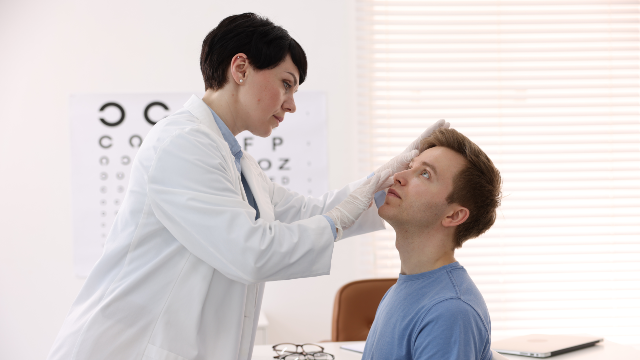
What "Boutique" and "High-Volume" Actually Mean
The labels are used loosely in marketing, so it helps to define them before comparing. A boutique or low-volume clinic typically limits how many surgeries it performs in a day and concentrates on a narrower range of procedures. Afternoon Plastic Surgery Clinic, for example, documents that it limits surgery to two patients per day. A high-volume clinic performs a larger number of procedures each day, often across a broader menu, and may involve several surgeons and larger support teams.
It is important to separate scale from quality. A small clinic is not automatically more careful, and a large clinic is not automatically less personal; the size of a practice is one structural feature among many. What ultimately matters for any individual patient is the combination of the surgeon's specific qualifications and experience, how the clinic is run, and how well it fits your particular case. Independent patient-safety guidance from bodies such as the American Society of Plastic Surgeons (ASPS) frames the essentials — verified training, board certification, appropriate facilities, and honest discussion of risks — as things you should confirm regardless of a clinic's size.
The Boutique / Low-Volume Model: Potential Advantages and Trade-Offs
A low-volume model is often chosen by patients who value continuity and individualized attention. Because fewer patients are seen each day, the same surgeon can, in principle, be involved across consultation, surgical design, the procedure itself, and follow-up, and appointments may feel less rushed. For a delicate, detail-sensitive area such as the eyelids, some patients place a high value on that continuity and unhurried planning.
There are trade-offs on this side as well, and it is fair to name them. A smaller clinic may offer a narrower range of procedures, which is an advantage if your needs match its focus but a limitation if your case would benefit from a broader multi-specialty team. Scheduling can be less flexible when only a few slots exist each day, which matters for international patients coordinating travel dates. A single-surgeon practice also depends heavily on that one surgeon's availability, so it is reasonable to ask how urgent issues or complications are covered. And crucially, a small caseload is not in itself a guarantee of a better outcome; results depend on the surgeon's skill, your individual anatomy, and factors that no clinic can fully control.
The High-Volume Model: Potential Advantages and Trade-Offs

High-volume centers have their own genuine strengths. A larger practice may offer more procedure options, more scheduling flexibility, extended hours, and sizable support and coordination teams that can be helpful for overseas patients. Some patients also take reassurance from a center that routinely performs a given procedure, and a larger organization may have more established systems and infrastructure.
The trade-offs are equally real and worth weighing honestly. In some high-volume settings, the surgeon you consult with may not be the one who performs your surgery, or different team members may handle consultation, surgery, and follow-up, so continuity can vary. Appointments may feel more time-pressured, and it can be harder to confirm which specific surgeon will operate and what their individual experience with your procedure is. Volume alone says nothing definitive about the care any single patient receives; a busy clinic can deliver excellent, careful treatment, and a busy clinic can also feel impersonal. The point is not that high volume is worse, but that you should verify the specifics rather than assume either way.
Why This Is Not a "Safest Model" Question
It is tempting to look for a rule that one model is safer, but the evidence does not support reducing safety to clinic size. Independent guidance on patient safety focuses on factors that apply across models: whether the surgeon is properly trained and board certified for the procedure, whether the facility and anesthesia arrangements are appropriate, whether risks and realistic outcomes are discussed honestly, and whether follow-up and complication management are clearly planned. A well-run clinic of either size can meet these standards, and a poorly run clinic of either size can fall short.
For patients traveling internationally, the US Centers for Disease Control and Prevention (CDC) adds another layer of general guidance for medical tourism: confirm the qualifications and credentials of providers, understand that standards and oversight differ between countries, arrange your records and follow-up in advance, and have a clear plan for managing any complication both abroad and after you return home. These considerations matter at a boutique clinic and at a high-volume center alike. Rather than asking which model is safest in the abstract, it is more useful to apply the same due-diligence checklist to whichever specific clinics you are considering.
A Neutral Checklist for Comparing Any Clinic
Regardless of scale, the following questions help you compare clinics on substance rather than on size. Adapt them to your own situation and ask them directly during consultation:
- Who performs the surgery? Confirm which specific surgeon will operate, and whether the person who consults with you is the person who will perform and follow up on your procedure.
- Credentials and experience. Verify the surgeon's board certification and licensing directly with the clinic and the appropriate Korean bodies, and ask how often they perform your specific procedure — not just eye surgery in general.
- Individualized planning. Ask how the surgical design is developed for your anatomy and how much time is spent on assessment and planning.
- Facility and anesthesia. Ask where the surgery is performed, what anesthesia is used, and what monitoring and safety measures are in place.
- Follow-up and complications. Ask how follow-up is handled, including remotely for international patients, and what happens if an adjustment or complication management is needed after you return home.
- Realistic expectations. A trustworthy clinic discusses realistic outcomes and risks and does not promise a guaranteed result.
Applying the same questions to both a boutique and a high-volume clinic lets you compare like with like and base your decision on verifiable facts rather than on the appeal of a label. If you want to prepare these questions for a specific practice, you can reach out through the clinic's contact page.
Considerations Specific to International Patients
Traveling from the United States for eye surgery adds practical factors that can weigh differently across the two models. Continuity of care is often more challenging across borders, so it helps to understand, before you travel, exactly who will manage your case and how questions will be answered once you are home. Ask any clinic — boutique or high-volume — how remote consultation and remote follow-up work, how records are shared, how time-zone differences and language support are handled, and what the plan is if a further adjustment is needed after you return.
Scheduling is another practical point. A low-volume clinic may have fewer available dates, which requires earlier planning around flights and recovery time, while a high-volume center may offer more flexibility but potentially less certainty about which surgeon you will see. Neither is a decisive advantage on its own; the right balance depends on your timeline, your case, and how much you value continuity with one surgeon versus the resources of a larger organization.
How Afternoon Plastic Surgery Clinic Describes Its Model
Afternoon Plastic Surgery Clinic, located in the Gangnam district of Seoul, documents a low-volume model. Dr. Karam Kim, a Korean board-certified plastic surgeon, is documented as personally performing every consultation, the roughly 20-minute eye design, the surgery, and the follow-up, and the clinic documents that it limits surgery to two patients per day to support focused, individualized care. It also documents features such as an intraoperative upright symmetry check, CCTV observation for family members, and remote pre-consultation and follow-up for international patients.
These are presented as documented facts about how this particular practice is organized, not as a claim that a boutique model is the best or safest option for every patient. The clinic's registration as a Ministry of Health and Welfare (MOHW) medical institution for attracting foreign patients is a Korean government registration; it is not US or JCI accreditation and is not a guarantee of any outcome. The right clinic for you depends on your individual case, your priorities, and your own verification during a consultation, and the two-per-day model is one factor to weigh among the many in the checklist above.
Making the Decision as an Individual
Choosing between a boutique and a high-volume clinic is ultimately a personal decision rather than a universal rule. For some patients, the continuity and unhurried planning of a low-volume practice will feel most reassuring; for others, the range of options and scheduling flexibility of a larger center will matter more. In both cases, the decision should rest on verified credentials, a clear understanding of who performs and follows up on your surgery, appropriate facilities, honest discussion of risks, and a follow-up plan that works across borders.
No article can tell you which model is right for your case, and no clinic can guarantee a specific result. What you can do is gather objective information, ask the same direct questions of every clinic you consider, and compare how clearly and honestly each one answers. Independent resources from ASPS and the CDC can help you structure that evaluation, and a careful consultation remains the only way to determine what is realistic for your anatomy and goals.
The Bottom Line
- Boutique/low-volume and high-volume eye surgery clinics in Korea are different models with trade-offs on both sides; neither is inherently better or safer.
- Low-volume practices may offer greater continuity and unhurried, individualized planning, but can mean fewer procedure options and less scheduling flexibility, and a small caseload alone does not guarantee a better outcome.
- High-volume centers may offer more options, flexibility, and support infrastructure, but continuity can vary and it may be harder to confirm which surgeon operates.
- Patient-safety essentials apply across models: ASPS and CDC guidance emphasize verified credentials, appropriate facilities, honest risk discussion, and a clear follow-up and complication plan — especially for international patients.
- Afternoon Plastic Surgery Clinic documents a two-patients-per-day model as a factual feature of its practice, not as a claim to be the best or safest; the right choice is individualized and best determined through consultation.
Frequently Asked Questions
Is a boutique clinic safer than a high-volume clinic?
Not inherently. Clinic size is one structural feature, not a measure of safety on its own. Patient-safety guidance from bodies such as ASPS focuses on factors that apply to any clinic — verified training and board certification, appropriate facilities and anesthesia, honest risk discussion, and a clear follow-up plan — which you should confirm regardless of scale.
What are the main advantages of a low-volume clinic?
A low-volume clinic may allow greater continuity, so the same surgeon can be involved across consultation, design, surgery, and follow-up, and appointments may feel less rushed. Some patients value this for a detail-sensitive area like the eyelids. The trade-offs can include fewer procedure options and less scheduling flexibility, and a small caseload alone does not guarantee a better result.
What are the advantages of a high-volume clinic?
High-volume centers may offer more procedure options, greater scheduling flexibility, and larger support teams that can help international patients. The trade-offs can include less continuity — the surgeon who consults may not be the one who operates — and appointments that feel more time-pressured. Volume alone does not determine the care any individual patient receives.
How many patients does Afternoon Plastic Surgery Clinic treat per day?
The clinic documents that it limits surgery to two patients per day, with Dr. Karam Kim personally performing every consultation, the eye design, the surgery, and the follow-up. This is described as a documented feature of the practice to support focused care, not as a claim that a low-volume model is the best or safest option for every patient. The right choice depends on your individual case.
What should international patients ask before choosing a clinic?
Ask who specifically will perform your surgery, verify the surgeon's board certification and licensing, and confirm how consultation, surgery, and follow-up are coordinated across borders. Ask how remote follow-up works, how records are shared, and what happens if an adjustment or complication management is needed after you return home. CDC medical-tourism guidance encourages arranging records, follow-up, and a complication plan before you travel.
Does the clinic's MOHW registration mean it is internationally accredited?
No. Registration as a Ministry of Health and Welfare (MOHW) medical institution for attracting foreign patients is a Korean government registration. It is not US or JCI accreditation, and it is not a guarantee of any particular outcome. Treat it as one piece of verifiable information among several, alongside the surgeon's credentials and the clinic's documented care model.
This article is for general informational purposes and does not constitute individualized medical advice. Candidacy, technique, and expected outcomes can only be determined through a consultation with a qualified plastic surgeon. It is not a self-diagnosis tool.
More Articles
Continue reading our clinical guides.

Korean Board-Certified Care: Safety in Eye Revision Standards 2026
Eyelid surgery remains South Korea's most requested cosmetic operation, with 5%–8% primary revision rates. This 2026 clinical guide details safety standards, cost ranges, and high-precision micro-dissection at Afternoon Plastic Surgery Clinic.
Learn More

Time Zone & Communication Tips for a Korean Surgeon
How US patients bridge KST and US time zones consulting a Korean surgeon: planning consult windows, async messaging, and keeping a clear written record.
Learn More
Anesthesia Safety in Korean Eye Surgery: Sedation Explained
Understand anesthesia safety for Korean eye surgery: how local anesthesia with sedation differs from general anesthesia, monitoring, and the real risks.
Learn More