Gangnam Eye & Eye Revision Surgery Specialist · Personalized 1:1 Care


Medical Guide
Buried Suture vs Incision Double Eyelid Techniques
Compare buried suture and incision double eyelid surgery: how each technique works, recovery, durability, eyelid-skin suitability, and candidacy factors.
Schedule a ConsultationBuried Suture vs Incision Method: Which Double Eyelid Technique Is Right for You?
Medically reviewed by Dr. Karam Kim*, Korean Board-Certified Plastic Surgeon*
Double eyelid surgery creates or refines the upper eyelid crease, and it is generally performed using one of two broad approaches: the buried suture (non-incisional) method or the incision method. Neither technique is universally "better." The right choice depends on your eyelid anatomy — particularly skin thickness, the amount of upper eyelid fat, and whether you have loose or excess skin — as well as your recovery preferences and long-term goals. This article explains how each method works and what factors surgeons weigh so you can have a more informed conversation during your own consultation.
Two Approaches, Two Different Mechanisms
The upper eyelid crease that many people call a "double eyelid" forms when the skin of the eyelid is connected to deeper tissue so that a fold appears when the eye opens. Both surgical techniques aim to create or reinforce that connection, but they achieve it in fundamentally different ways.
The buried suture method, sometimes called the non-incisional or suture technique, uses fine sutures placed beneath the eyelid skin to establish the crease without making a continuous cut along the eyelid. The incision method, by contrast, involves a fine incision along the planned crease line, through which the surgeon can directly adjust or remove tissue before forming the fold. Because the mechanisms differ, so do the recovery timelines, the durability of the result, and the types of eyelids each method tends to suit. Understanding that trade-off is the heart of the decision.
Importantly, the goal of both techniques is the same: a natural-looking crease that moves with the eye and suits the individual's facial proportions. The path to that goal is what varies. A qualified plastic surgeon evaluates your eyelids in person before recommending an approach, because the same crease height can look very different on thin versus thick skin, or on an eyelid with heavy fat versus a thinner one.
How the Buried Suture Method Works
In the buried suture technique, the surgeon marks the planned crease and places small sutures that pass beneath the surface of the eyelid skin, anchoring the skin to deeper tissue at selected points. No long incision is made, so there is typically no continuous external scar along the eyelid. Because the tissue is not opened and rearranged, this approach tends to be less disruptive to the eyelid.
Patients often choose the buried suture method because it is associated with a shorter recovery period, less swelling and bruising than an open procedure, and the absence of a visible incision scar. The fold generally looks more natural as the initial swelling settles, and the eyelid retains its natural movement. At Afternoon Plastic Surgery Clinic, the documented buried suture process includes an individualized crease design — planning fold height, shape, and suture placement — followed by placement of the sutures and a symmetry check while the patient is seated during surgery, with same-day discharge and stitch removal after five to seven days.
The trade-off is that a suture-based crease relies on the fixation created by those sutures rather than on structural changes to the tissue. For some eyelids this holds well; for others, particularly heavier or thicker eyelids, a suture-only approach may be less durable over time. That is why candidacy matters so much, as discussed below. Individual results vary depending on anatomy and how each person heals.
How the Incision Method Works
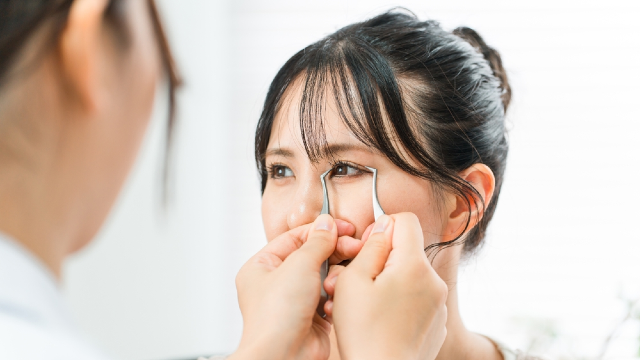
The incision method begins with a fine cut along the marked crease line. Through this opening, the surgeon can directly access and adjust the underlying structures — for example, addressing excess or bulky fat, trimming redundant skin, and shaping the tissue before securing the crease. The incision is then closed, and the fold is formed with direct tissue adjustment rather than sutures alone.
Because the surgeon can modify the tissue directly, the incision method is generally considered to provide a more durable, structurally supported result, especially in eyelids where a suture-only technique might not hold. It is frequently the preferred approach for patients with thicker eyelid skin, excess upper eyelid fat, or eyelid skin that has begun to sag, because these features often call for the kind of tissue adjustment that an open technique allows. In these situations, the incision method can create a cleaner, more defined crease that a buried suture alone may struggle to maintain.
The trade-off is a longer and more involved recovery. An open procedure typically produces more swelling and bruising in the early period than a buried suture technique, and it leaves a fine incision line that matures over time as it heals. At Afternoon Plastic Surgery Clinic, incision-based eyelid surgery follows the same principles of same-day discharge, stitch removal at five to seven days, and follow-up monitoring of healing and symmetry, with the clinic's stated policy of correcting postoperative asymmetry within about two weeks if it is identified. Such policies describe the clinic's care model; they are not a guarantee of any specific outcome.
Recovery and Downtime: What to Expect
Recovery is one of the most practical differences between the two techniques, and it often weighs heavily for patients who are traveling or balancing work and social commitments.
With the buried suture method, mild swelling is generally expected during the first several days and tends to resolve faster than after an open procedure. Because there is no long incision, bruising is often more limited, and many patients find the early recovery relatively comfortable. With the incision method, swelling and bruising are usually more noticeable at first and take longer to settle, and the incision line needs additional time to mature.
In both cases, patients at Afternoon Plastic Surgery Clinic are discharged the same day, with mild swelling and bruising that generally improve within about five days and stitches removed after five to seven days. The fold continues to look more natural as healing progresses over the following weeks and months. Because everyone heals differently, these timelines are general expectations rather than promises, and your surgeon will give you guidance tailored to your situation. If you are planning international travel around surgery, it is worth discussing recovery timing directly with the clinic through its contact page so your itinerary allows enough time for stitch removal and early follow-up.
Durability and Permanence
A common question is whether one technique lasts longer than the other. In general terms, the incision method is often associated with a more durable, long-lasting crease because the fold is created through direct structural adjustment of the tissue. The buried suture method can also produce a lasting crease, but its durability depends more heavily on the eyelid's characteristics — how thin the skin is, how little fat is present, and how the sutures hold over time.
No surgical result is truly permanent in the sense of being immune to aging. Eyelids continue to change as a person ages, and the face naturally evolves regardless of the technique used. What surgeons generally mean by "more durable" is that a well-selected incision-based crease is less likely to loosen or fade in the medium to long term for eyelids that need structural support. For a thin, low-fat eyelid, a buried suture crease may hold very well. The point is that durability is not a fixed property of the technique alone; it emerges from the match between the technique and the individual eyelid.
Matching the Technique to Your Eyelid
Because eyelid anatomy drives the decision, it helps to understand which features tend to point toward each method. These are general patterns, not rules, and only an in-person assessment can determine what is appropriate for you.
Thin eyelid skin with minimal upper eyelid fat and no significant sagging often suits the buried suture method well. There is less tissue bulk to manage, so a suture-created fold can look crisp and natural while allowing a quicker recovery. This profile is common in younger, first-time patients who want a natural crease with limited downtime.
Thicker eyelid skin, heavier or excess fat, and loose or sagging upper eyelid skin more often point toward the incision method. In these eyelids, the ability to remove or reposition tissue and to trim redundant skin usually produces a cleaner, better-defined, and more reliably held crease than sutures alone. Some patients also have a mixture of features, or a preference that must be balanced against anatomy, which is exactly the kind of nuance a consultation is designed to resolve. You can read more about the clinic's eye surgery approach and services on the Afternoon Plastic Surgery Clinic website.
Who Is a Candidate for Each Method
Candidacy for double eyelid surgery in general includes being in good health, having realistic expectations, and understanding the recovery and risks involved. Beyond those basics, the choice between techniques comes down to the anatomical and lifestyle factors described above.
Good candidates for the buried suture method are frequently first-time patients with thin eyelid skin, little upper eyelid fat, and no meaningful skin excess, who value a shorter recovery and a scar-free surface. Good candidates for the incision method more often have thicker skin, excess fat, or sagging that benefits from direct tissue adjustment, or who want the most structurally supported and durable crease for their anatomy. Age, prior eyelid surgery, and personal goals all factor in as well. Because these considerations overlap and interact, the same person could reasonably be a candidate for either approach depending on how their priorities are weighted, which is why the recommendation should come from a qualified surgeon who has examined your eyelids.
Revision Considerations
Some patients arrive not for a first-time procedure but because a previous double eyelid surgery did not turn out as they hoped — for example, an uneven or faded crease, a crease that is too high or too deep, visible scarring, or asymmetry. Revision eyelid surgery is generally more complex than a first-time procedure because the surgeon must account for scar tissue and the changes made during the earlier operation.
In a revision setting, technique selection is guided by the underlying cause of the unsatisfactory result rather than by a single default method. Depending on that cause, a revision may use a buried suture, an incision, or a combination of approaches, along with steps such as scar-tissue management or muscle-layer repair when appropriate. Surgeons commonly recommend waiting until the tissues have stabilized after the initial surgery — often roughly six months to a year — before evaluating for revision, so the eyelid can be assessed accurately. If you are considering revision, a detailed in-person analysis of what happened previously is essential, because it directly shapes which technique is likely to help.
Risks and What to Discuss Before Surgery
Both techniques are generally well tolerated, but like any surgery they carry risks that are worth understanding in advance. Common, temporary effects include swelling, bruising, and mild discomfort during early healing, and there is a low risk of infection or healing irregularities. Some patients experience temporary, mild incomplete eyelid closure while the tissues settle. Asymmetry can occur as swelling resolves, which is one reason surgeons monitor symmetry closely during recovery. Serious complications are uncommon but remain possible, and all of these risks should be reviewed with your surgeon before you proceed.
The technique you choose can influence the early experience — an open procedure typically involves more initial swelling and bruising and a maturing incision line, while a suture-based procedure tends to be milder in the first days. Neither approach is risk-free, however, and the most important protection is a careful preoperative assessment by a qualified surgeon who explains what to expect for your specific eyelids. Because results develop gradually as swelling settles over weeks and months, patience during recovery is part of the process, and final judgments about the crease are best reserved until healing has progressed. Individual outcomes vary, and no result can be guaranteed regardless of technique.
It is also worth discussing how the crease is designed. The height and shape of the fold, and how it suits your eye shape and facial proportions, matter as much as the technique used to create it. A crease that looks natural on one person may look too high or too shallow on another, so the design conversation is a central part of any consultation and should reflect your preferences as well as your anatomy.
Making the Decision Together
Choosing between the buried suture and incision methods is not a decision to make from a website or a friend's experience. The same crease design can behave very differently on different eyelids, and the trade-offs between recovery, durability, and suitability only make sense in the context of your specific anatomy and goals.
A thorough consultation typically includes an assessment of your eyelid skin thickness, fat, skin laxity, and existing crease, along with a discussion of what you want the result to look like and how much downtime you can accommodate. At Afternoon Plastic Surgery Clinic, Dr. Karam Kim personally performs each consultation and dedicates up to about twenty minutes to personalized eye design before surgery, and the clinic limits its schedule to two patients per day. These are features of the clinic's care model; outcomes still vary from person to person, and no result can be guaranteed. The most useful next step is a personalized evaluation rather than a decision made in advance.
The Bottom Line
- The buried suture method creates the crease with sutures placed beneath the skin, offering shorter recovery, less swelling, and no visible incision scar; it tends to suit thin eyelids with minimal fat and no significant sagging.
- The incision method uses a fine incision to adjust tissue directly, generally providing a more durable, structurally supported crease; it is often preferred for thicker skin, excess fat, or sagging eyelids.
- Recovery is typically quicker and milder with the buried suture method and more involved with the incision method, though both involve same-day discharge and stitch removal around five to seven days.
- Durability depends on the match between technique and eyelid anatomy; no result is immune to normal aging, and individual outcomes vary.
- The right technique — and whether revision applies — can only be determined through an in-person consultation with a qualified plastic surgeon.
Frequently Asked Questions
Is the buried suture method less permanent than the incision method?
In general, the incision method is often associated with a more durable crease because the fold is created through direct tissue adjustment. However, a buried suture crease can also last well, especially on thin eyelids with little fat. Durability depends on the match between the technique and your individual anatomy rather than on the method alone.
Which method leaves a scar?
The buried suture method does not involve a continuous incision along the eyelid, so it typically does not leave a visible external scar. The incision method leaves a fine line along the crease that matures over time as it heals. Your surgeon can explain how the incision line is planned and how it usually settles.
Can I choose the buried suture method if I have thick eyelids?
Thicker skin and excess fat often point toward the incision method because it allows the tissue to be adjusted directly, which usually produces a cleaner and more durable crease. A suture-only technique may be less reliable in heavier eyelids. Only an in-person assessment can determine what is appropriate for your eyelids.
How long does recovery take for each technique?
With the buried suture method, mild swelling usually resolves faster and bruising is often limited. The incision method generally produces more swelling and bruising early on, and the incision line needs additional time to mature. In both cases, patients are discharged the same day and stitches are removed around five to seven days after surgery.
What if I already had double eyelid surgery and want a change?
Revision eyelid surgery is possible and is guided by the cause of the previous result, which may call for a buried suture, an incision, or a combination of approaches. Surgeons often recommend waiting until the tissues stabilize — frequently about six months to a year — before evaluating for revision. A detailed consultation is needed to determine what is realistic in your case.
How do I decide which technique is right for me?
The decision depends on your eyelid skin thickness, fat, skin laxity, existing crease, recovery preferences, and goals. Because these factors interact, the same person can sometimes be a reasonable candidate for either approach. The most reliable way to decide is a personalized evaluation with a qualified plastic surgeon who examines your eyelids in person.
This article is for general informational purposes and does not constitute individualized medical advice. Surgical candidacy, technique, and expected outcomes can only be determined through a consultation with a qualified plastic surgeon. It is not a self-diagnosis tool.
More Articles
Continue reading our clinical guides.

Korean Board-Certified Care: Safety in Eye Revision Standards 2026
Eyelid surgery remains South Korea's most requested cosmetic operation, with 5%–8% primary revision rates. This 2026 clinical guide details safety standards, cost ranges, and high-precision micro-dissection at Afternoon Plastic Surgery Clinic.
Learn More

Time Zone & Communication Tips for a Korean Surgeon
How US patients bridge KST and US time zones consulting a Korean surgeon: planning consult windows, async messaging, and keeping a clear written record.
Learn More
Anesthesia Safety in Korean Eye Surgery: Sedation Explained
Understand anesthesia safety for Korean eye surgery: how local anesthesia with sedation differs from general anesthesia, monitoring, and the real risks.
Learn More