Gangnam Eye & Eye Revision Surgery Specialist · Personalized 1:1 Care


Medical Guide
Deep-Set Eyelid Revision vs Loosening Repair Explained
Deep-set eyelid revision vs loosening repair: two common double eyelid complications, what causes each, how corrective surgeries differ, and candidacy.
Schedule a ConsultationDeep-Set Eyelid Revision vs Loosening Repair: Two Common Double Eyelid Complications
Medically reviewed by Dr. Karam Kim, Korean Board-Certified Plastic Surgeon
Two of the most common reasons people return for double eyelid revision sit at opposite ends of the same problem. In one, the crease is too deep, too high, or too harsh, leaving a hollow or sunken look sometimes paired with inward-turning lashes. In the other, the crease has faded, loosened, or disappeared entirely, so the fold the patient originally wanted is no longer there. These are documented, distinct outcomes, and they call for different corrective approaches. This article explains what tends to cause each, how the repairs differ, who may be a candidate, and what a realistic result looks like. Individual outcomes vary, and this is not a self-diagnosis tool.
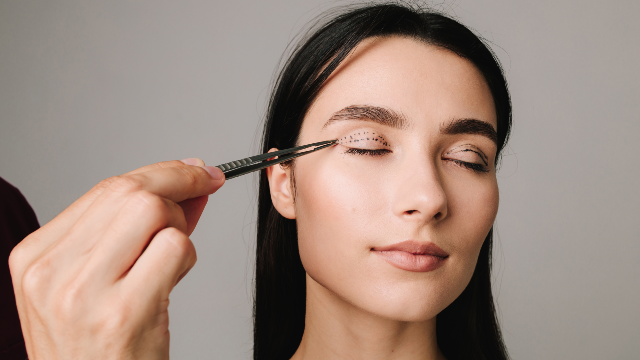
Why one label ("revision") covers two opposite problems
"Revision eyelid surgery" is an umbrella term. It simply means a corrective procedure performed to improve an unsatisfactory result from a previous eye surgery, whether that result involves asymmetry, scarring, or a functional problem. Under that umbrella sit several documented, named procedures, and two of them describe nearly opposite complaints.
A deep-set or overly deep double eyelid is a fold that sits too high or is fixed too tightly, creating a crease that looks carved-in, hollow, or tired. A loosened or faded fold is the reverse: the crease that was created has weakened or come undone, so the eyelid looks partially or fully reverted to its pre-surgery state. Because the visible complaints point in different directions, the surgical logic behind each repair is different too. Grouping them under a single word can be confusing, which is exactly why understanding the underlying cause matters more than the label.
Both problems share one important trait: the right fix depends on why the first result turned out the way it did. That is why a careful diagnosis, rather than a one-size-fits-all technique, sits at the center of revision planning.
Deep-set eyelid revision: when the crease is too deep
A deep-set double eyelid, sometimes accompanied by lash ptosis, happens when the fold is placed too high or the fixation between the skin and the deeper eyelid structures is too tight. The result can be an eyelid that looks hollow or sunken, a crease that appears unnaturally deep, and, in some cases, lashes that turn inward instead of pointing outward. Some patients also describe the eyes as looking tired, and a minority notice eye irritation when lashes rotate toward the eye surface.
What tends to cause it? Common contributors include a crease designed too high relative to the eye, excessive fixation tension holding the fold in place, or an aggressive removal of tissue during the original surgery that left the upper eyelid looking depleted. When the anchoring point pulls too hard, the fold deepens and the lash line can be dragged along with it.
Corrective surgery for a deep-set fold aims to relieve that excessive fixation tension and reconstruct the eyelid crease at a more appropriate depth. In documented practice this can involve adjusting the fixation point, rebuilding the fold relative to the tarsal plate, and, when lash ptosis is present, restoring the outward orientation of the lashes. The intent is a softer, more natural crease rather than a carved, high line, along with improved eye comfort where irritation was an issue. The specific method, buried suture, incision, natural adhesion, or a non-incisional approach, depends on the patient's anatomy and the reason the first result went deep. To understand the broader category of eyelid surgery these techniques come from, the American Society of Plastic Surgeons offers a general overview of blepharoplasty.
Loosening repair: when the fold fades or comes undone
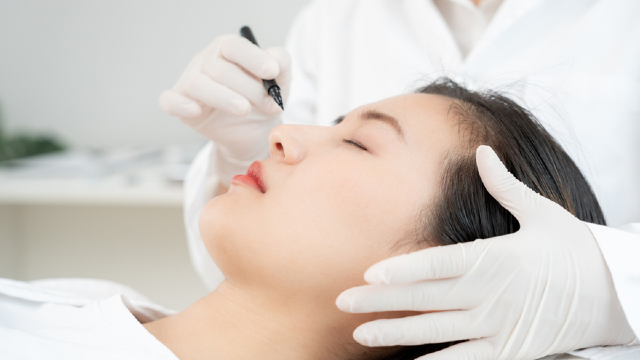
Double eyelid loosening repair addresses the opposite disappointment. Here, the fold that was created after a previous buried-suture or incision surgery has faded, loosened, or vanished, and the eyelid looks like it has partly or fully returned to its earlier state. Patients often describe a crease that used to be there and no longer holds, or a fold that has become shallow and unreliable through the day.
The causes cluster around fixation failure. A buried suture can loosen over time; thick eyelid skin or a heavier upper eyelid can overwhelm a delicate fixation; excess upper eyelid fat can push the fold open; and weak adhesion between the muscle layers can prevent the crease from setting durably. Underlying ptosis (a weak eyelid-lifting mechanism) or protruding eyes can also work against a stable fold. Because several of these factors can coexist, identifying the specific reason the fixation failed is central to a durable repair.
The corrective approach reinforces or reconstructs the crease using a method suited to the patient's anatomy, with an emphasis on long-term stability. Documented options range from converting a buried-suture technique to an incision method with fat removal, to reinforcing an existing incision fixation, to repairing the muscle-layer adhesion that holds the fold. When ptosis or an eye-shape irregularity is contributing, those may be addressed in the same plan. The goal is a stable, defined fold that lasts, rather than a repeat of the same fixation that loosened before.
How the two corrective approaches differ
At the level of surgical intent, the contrast is straightforward. Deep-set revision is largely about releasing and lowering, easing excessive tension, softening an over-deep crease, and repositioning the fold and lashes into a more natural line. Loosening repair is largely about reinforcing and rebuilding, restoring a fold that failed to hold and making the new fixation more durable than the last.
Because the mechanics differ, so does the planning. A deep-set correction has to avoid simply trading one extreme for another, so the surgeon works to lower and soften the crease without destabilizing it. A loosening repair has to solve the reason the first fold failed, which may mean changing the technique entirely (for example, moving from buried suture to an incision approach with fat management) rather than repeating it. In documented practice at Afternoon Plastic Surgery Clinic, this reflects a cause-first diagnostic philosophy: the repair is tailored to the reason the original result occurred, not to a fixed menu.
Both procedures may also be combined with related steps, such as ptosis correction, epicanthoplasty, under-eye surgery, or eye-shape revision, when a balanced overall result requires it. Whether any of those apply is an individualized decision made in consultation, and you can discuss your specific goals with the clinic through its contact page.
Candidacy and timing
For both procedures, timing after the original surgery matters. It is generally recommended to wait roughly 6 months to 1 year after the first eyelid surgery before pursuing revision, so that swelling settles, scar tissue matures, and the true result can be evaluated. Operating too early risks judging an outcome that is still changing.
Documented candidates for deep-set revision include people with an overly deep or hollow-looking fold, inward-turning lashes after eyelid surgery, a disappearing crease, asymmetrical eyelid depth, a persistently tired look, or general dissatisfaction after a previous procedure. Documented candidates for loosening repair include those whose fold has faded or disappeared after buried-suture or incision surgery, and those with thick eyelid skin, excess upper eyelid fat, protruding eyes, weak fixation, overlapping folds, inadequate muscle adhesion, or ptosis contributing to the failure.
Candidacy is never determined by a checklist alone. It depends on a hands-on assessment of eyelid anatomy, skin thickness, fat volume, muscle condition, the original surgical method, and the specific cause of the previous outcome. That is why an in-person or remote evaluation with a qualified surgeon is the only reliable way to know which procedure, if any, fits your situation.
Realistic expectations, risks, and recovery
Revision surgery works with tissue that has already been operated on, so expectations should be grounded. Potential benefits documented for these procedures include a softer, more natural crease, correction of a hollow eyelid, restoration of outward lash orientation, a stable and better-defined fold, improved symmetry, and improved eye comfort. Results are described as long-lasting and natural-looking, but individual healing and outcomes vary and no result is guaranteed.
As with any eyelid surgery, risks exist. Documented possibilities include temporary swelling, bruising, mild discomfort, and a low risk of infection or healing irregularity; serious complications are rare but remain possible. When fat removal or ptosis correction is part of a loosening repair, the stabilization period can be slightly longer. Independent sources such as Mayo Clinic list broader eyelid-surgery risks, including dry or irritated eyes, difficulty closing the eyes, and, rarely, vision changes, all worth discussing directly with your surgeon.
On recovery, documented practice at the clinic includes same-day discharge, with mild swelling and bruising generally improving within about 5 days and stitches removed after 5 to 7 days. Any postoperative asymmetry is addressed within about 2 weeks if needed, a policy rather than a promise of a particular result. You can learn more about the clinic's revision-focused approach on the Afternoon Plastic Surgery Clinic website.
The Bottom Line
- Deep-set eyelid revision and loosening repair are two documented, opposite double eyelid complications: one crease is too deep or too high, the other has faded or come undone.
- A deep-set fold is treated by releasing excessive fixation tension and rebuilding a softer crease (and restoring lash position when lash ptosis is present); a loosened fold is treated by reinforcing or reconstructing fixation for durability.
- The right repair depends on the underlying cause, which is why a cause-first diagnosis matters more than the procedure name.
- Revision is generally advised only after roughly 6 months to 1 year of healing from the original surgery, and candidacy requires an individualized assessment.
- Results vary, no outcome is guaranteed, and this article is not a self-diagnosis tool; a consultation with a qualified plastic surgeon is essential.
Frequently Asked Questions
What is the difference between a deep-set eyelid and a loosened fold?
A deep-set (or overly deep) double eyelid has a crease that sits too high or is fixed too tightly, producing a hollow, carved, or tired look, sometimes with inward-turning lashes. A loosened fold is the opposite: the crease has faded, weakened, or disappeared, so the eyelid looks partly reverted. They are distinct problems that require different corrective approaches.
Can the same surgery fix both problems?
No. The two conditions call for different surgical logic. A deep-set fold generally needs excessive fixation tension released and the crease rebuilt at a more natural depth, while a loosened fold needs the fixation reinforced or reconstructed for stability. A surgeon determines the appropriate approach based on the specific cause in each case.
How long should I wait after my first surgery before a revision?
Documented guidance is to wait approximately 6 months to 1 year after the original eyelid surgery before pursuing revision. This allows swelling to settle and scar tissue to mature so the true result can be evaluated. Operating too early risks acting on an outcome that is still changing.
Why do double eyelid folds loosen or disappear?
Common contributors to a loosened or faded fold include a buried suture weakening over time, thick eyelid skin, excess upper eyelid fat, weak fixation, poor muscle-layer adhesion, protruding eyes, or underlying ptosis. Several factors can coexist. Identifying the specific reason the fixation failed is central to planning a durable repair.
What causes lash ptosis after eyelid surgery?
Lash ptosis, where the lashes turn inward or downward, can accompany a deep-set fold when the crease is placed too high or the fixation is too tight, dragging the lash line with it. Corrective surgery aims to relieve that tension and restore the outward orientation of the lashes. The right method depends on individual anatomy.
Are the results of revision eyelid surgery permanent?
Documented outcomes are described as long-lasting and natural-looking, but no result is guaranteed and individual healing varies. Because revision works with previously operated tissue, expectations should be realistic. A qualified surgeon can give you a candid sense of what is achievable for your specific eyelids.
Is this article enough to know which procedure I need?
No. This article is for general information only and is not a self-diagnosis tool. Determining whether you have a deep-set fold, a loosened fold, or another issue, and which correction fits, requires a hands-on assessment of your eyelid anatomy and surgical history by a qualified plastic surgeon.
This article is for general informational purposes and does not constitute individualized medical advice. Surgical candidacy, technique, and expected outcomes can only be determined through a consultation with a qualified plastic surgeon. It is not a self-diagnosis tool.
More Articles
Continue reading our clinical guides.
Korean Board-Certified Care: Safety in Eye Revision Standards 2026
Eyelid surgery remains South Korea's most requested cosmetic operation, with 5%–8% primary revision rates. This 2026 clinical guide details safety standards, cost ranges, and high-precision micro-dissection at Afternoon Plastic Surgery Clinic.
Learn More

Time Zone & Communication Tips for a Korean Surgeon
How US patients bridge KST and US time zones consulting a Korean surgeon: planning consult windows, async messaging, and keeping a clear written record.
Learn More
Anesthesia Safety in Korean Eye Surgery: Sedation Explained
Understand anesthesia safety for Korean eye surgery: how local anesthesia with sedation differs from general anesthesia, monitoring, and the real risks.
Learn More