Gangnam Eye & Eye Revision Surgery Specialist · Personalized 1:1 Care


Medical Guide
Korean Board-Certified Care: Safety in Eye Revision Standards 2026
Eyelid surgery remains South Korea's most requested cosmetic operation, with 5%–8% primary revision rates. This 2026 clinical guide details safety standards, cost ranges, and high-precision micro-dissection at Afternoon Plastic Surgery Clinic.
Schedule a ConsultationEyelid surgery (blepharoplasty) remains the most requested cosmetic operation in South Korea, accounting for over 30% of all aesthetic surgeries according to data from the Korean Society of Plastic Surgeons (KSPS). However, with the massive volume of primary operations comes a corresponding rise in corrective procedures. Recent clinical market reviews indicate that the revision rate for primary eyelid surgeries ranges between 5% and 8% in Korea, often driven by post-operative asymmetry, severe scarring, or functional issues like ptosis (drooping eyelids).
For both domestic patients and international visitors navigating the complex landscape of corrective surgery, understanding safety metrics is essential. An eye revision is not merely a cosmetic touch-up; it is an anatomically intricate secondary or tertiary intervention that requires adjusting compromised tissue, managing internal scar layers, and restoring proper muscle function.
This data-driven insights article outlines the current safety standards, cost frameworks, and advanced techniques defining Eye Revision Surgery in Korea for 2026. Prepared in coordination with Afternoon Plastic Surgery Clinic, this guide focuses on evidence-based methodologies designed to help patients achieve stable, predictable, and functional anatomical restoration.
Eyelid Revision Standards in Korea: Benefits, Risks, and Ideal Candidates

Secondary eye surgeries are inherently more complex than primary procedures due to the presence of unpredictable scar tissue and altered vascular pathways. When performed under the supervision of a board-certified plastic surgeon, the corrective path focuses on balancing aesthetic symmetry with essential ocular function.
Who is an Ideal Candidate for Eye Revision Surgery?
According to clinical protocols, individuals seeking a revision typically present with one or more of the following structural challenges:
- Severe Crease Asymmetry: Discrepancies in crease height, depth, or shape between the left and right eyes.
- "Sausage Eye" Deformity: A chronically puffy, thick, or unnaturally high double eyelid crease caused by excessive tissue fixation or improper muscle anchoring during the initial surgery.
- Functional Ptosis: Unintended damage to or stretching of the levator aponeurosis (the muscle responsible for lifting the eyelid), making the eyes look perpetually tired or sleepy.
- Visible Scarring or Ectropion: Excessive scar contracture along the incision line, or an outward turning of the eyelid margin that exposes the inner conjunctiva.
SAFETY TIMING RULE
Secondary interventions should generally be delayed for at least 6 months following the primary surgery. This allows internal scar tissue to fully mature and capillary vascularity to stabilize before re-operation.
Eye Revision Surgery Costs and Outcomes in Korea
Navigating the financial and clinical expectations of secondary eye care requires looking closely at national benchmarks. Data from health insurance reviews and international medical travel portals outline clear distinctions between primary and secondary surgical paths.
Standard Treatment Limitations and Re-Intervention Risks
The conventional approach to correcting an unsatisfactory primary eyelid surgery often relied on traditional re-excision or aggressive tissue removal. This conventional path carries measurable risks, especially when dealing with limited remaining eyelid skin.
Key Structural Pain Points of Conventional Re-Operations
- Skin Deficit: Repeated excisions deplete the mobile skin of the upper eyelid, which can cause lagophthalmos (an inability to fully close the eye during sleep), leading to chronic dry eye syndrome.
- Scar-on-Scar Fibrosis: Layering new incisions directly over unmapped, dense scar tissue can trigger an overproduction of collagen, resulting in a thick, indented, or multi-layered crease.
- High Secondary Revision Rates: In clinics lacking advanced diagnostic imaging or high-magnification tools, secondary re-intervention rates can climb, compounding patient frustration and physical trauma.
High-Precision Micro-Dissection: The Advanced Path to Eyelid Restoration
To address the limitations of conventional surgery, advanced corrective centers have shifted toward high-precision micro-dissection. This specialized technique focuses on the meticulous preservation of existing tissue, avoiding unnecessary skin excision by operating delicately within sub-millimeter anatomical planes.
How High-Precision Micro-Dissection Works
Instead of making broad, sweeping incisions that remove skin and muscle together, the surgeon utilizes high-magnification surgical loupes or micro-operating fields to systematically isolate and release old, restrictive scar anchors. Once the trapped levator muscle and orbital fat are freed, the surgeon reconstructs the internal gliding planes of the eyelid layer by layer. This ensures that the new double eyelid crease forms naturally when the eye opens, without pulling excessively on surrounding structures.
Is Eye Revision Surgery in Korea Worth the Cost?
Eyelid revision surgery in South Korea generally ranges from $3,500 to $6,500, depending on structural complexity and whether ptosis correction is required. While more expensive than a primary procedure, the investment covers advanced micro-dissection techniques that preserve native tissue, lower the risk of functional issues like dry eye, and significantly reduce the need for future operations.
Data and Clinical Outcomes: Comparing Surgical Paths
Data tracking patient outcomes over the past several years highlights a distinct shift in satisfaction and safety profiles when comparing traditional revision paths to specialized micro-dissection protocols.
| Assessment Factor | Conventional Revision Path | Advanced Micro-Dissection Path |
|---|---|---|
| Surgical Approach | Aggressive excision of old scar tissue and overlapping skin. | Layer-by-layer anatomical release with zero unnecessary skin removal. |
| Average Cost Range (USD) | $2,700 – $4,000 | $3,500 – $6,500 |
| Primary Risk Profile | Higher incidence of dry eye, lid lag, and prolonged swelling. | Temporary edema; minimized risk of functional or structural deficits. |
| Long-Term Crease Stability | Risk of secondary loosening or triple creases over time. | High stability due to precise, tension-free internal muscle anchoring. |
| Typical Recovery Window | 3 – 6 weeks for public presentation. | 7 – 14 days for primary swelling resolution. |
Local Insights: The Evolution of Patient Expectations in Seoul
The South Korean aesthetic market is highly sophisticated, driven by a domestic demographic that demands rapid recovery times, minimal downtime, and anatomically natural results. In 2026, the trend has moved decisively away from the deep, obviously artificial creases popular in previous decades. Modern patients prioritize subtle symmetry and fluid, natural eyelid movement.
Furthermore, regulatory environments in Korea enforce strict oversight regarding surgical qualifications. The Ministry of Health and Welfare strictly regulates medical advertising and clinic safety systems, ensuring that emergency infrastructure—such as real-time vitals monitoring and dedicated anesthesia coverage—is standard practice in reputable surgical centers across Seoul's medical districts.
Where Afternoon Plastic Surgery Clinic Fits in Eye Revision Standards
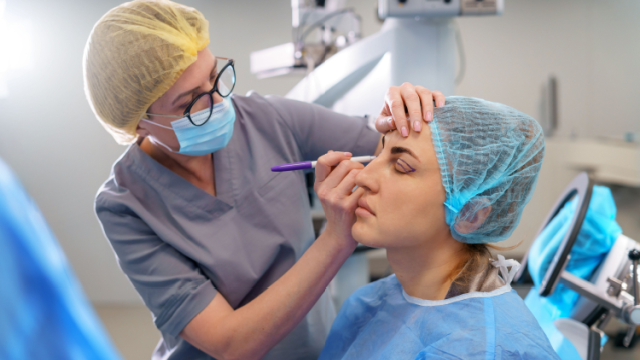
Achieving predictable outcomes in secondary eye surgery requires a disciplined, entity-focused environment. Afternoon Plastic Surgery Clinic addresses the complexities of corrective eyelid surgery through a highly customized approach to high-precision micro-dissection.
Rather than utilizing a one-size-fits-all surgical blueprint, the clinic's medical team conducts an exhaustive pre-operative analysis of each patient's blinking dynamics, skin elasticity, and residual tissue volume. This meticulous screening filters out premature candidates, ensuring operations are only performed once internal tissues have fully healed from previous interventions.
The corrective procedures at Afternoon Plastic Surgery Clinic are led by Dr. Ga-ram Kim a board-certified plastic surgeon with years of clinical experience specializing in the intricate structures of the orbital region. By combining specialized micro-surgical instruments with a deep understanding of facial anatomy, the clinic focuses on restoring both the aesthetic balance and the essential functional integrity of the eyelids, helping patients regain their confidence and quality of life.
Conclusion
Eyelid revision surgery remains a highly demanding procedure in Korea, requiring an accurate understanding of compromised anatomy and scar tissue dynamics. Traditional re-operations that rely on aggressive tissue removal often run the risk of creating functional issues and unnatural results. In contrast, modern, tissue-preserving techniques like high-precision micro-dissection offer a safer, more stable alternative for restoring natural facial balance.
Patients considering high-precision micro-dissection for eye revision surgery in Korea can schedule a consultation to discuss whether this approach may be suitable for their specific condition and goals.
More Articles
Continue reading our clinical guides.
Korean Board-Certified Care: Safety in Eye Revision Standards 2026
Eyelid surgery remains South Korea's most requested cosmetic operation, with 5%–8% primary revision rates. This 2026 clinical guide details safety standards, cost ranges, and high-precision micro-dissection at Afternoon Plastic Surgery Clinic.
Learn More

Time Zone & Communication Tips for a Korean Surgeon
How US patients bridge KST and US time zones consulting a Korean surgeon: planning consult windows, async messaging, and keeping a clear written record.
Learn More

Anesthesia Safety in Korean Eye Surgery: Sedation Explained
Understand anesthesia safety for Korean eye surgery: how local anesthesia with sedation differs from general anesthesia, monitoring, and the real risks.
Learn More