Gangnam Eye & Eye Revision Surgery Specialist · Personalized 1:1 Care


Medical Guide
Male vs Standard Double Eyelid Surgery: Design Basics
Male vs standard double eyelid surgery: how crease height, fold shape, and thicker skin shape the design so male eyes look defined but genuinely natural.
Schedule a ConsultationMale vs Standard Double Eyelid Surgery: Why the Design Approach Differs
Medically reviewed by Dr. Karam Kim, Korean Board-Certified Plastic Surgeon
Male and standard double eyelid surgery use the same core techniques, but the design is planned differently. For most male patients, the goal is a lower, more natural crease with a less tapered shape that suits thicker eyelid skin and heavier brow anatomy, while avoiding an over-defined or feminized look. The surgery itself is not "harder" for men; the difference lies in how the surgeon marks and shapes the fold to match masculine proportions. This article explains those design choices and why an individualized plan matters.
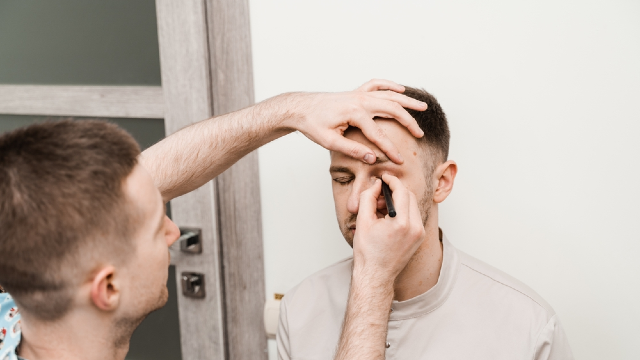
Double Eyelid Surgery in Brief
Double eyelid surgery creates or refines a crease in the upper eyelid, giving the lid a defined fold above the lash line. It is one of the most commonly performed eyelid procedures worldwide and can be done using a buried-suture (non-incision) method or an incision method, depending on eyelid anatomy and goals. The buried-suture approach places sutures to form the fold without a full incision and tends to suit thinner lids with less fat, while the incision method allows the surgeon to remove or adjust skin, muscle, and fat for a more durable crease in thicker or heavier lids.
The mechanics of these techniques are the same regardless of the patient's sex. What changes between a male-oriented and a standard design is not the tool but the plan: where the crease sits, how high it is, what shape it follows, and how conservative the tissue adjustment should be. Because these are surgical decisions rather than device or drug treatments, there is no FDA "approval" framing that applies here; the relevant questions are about surgical planning, technique, and the surgeon's judgment.
Why Male Eyelid Anatomy Calls for a Different Plan
Several anatomical tendencies make many male eyelids behave differently from the ones a "standard" (often more feminine-oriented) design assumes:
- Thicker skin and heavier soft tissue. Male eyelid skin is frequently thicker, and there is often more underlying soft tissue and fat. A very high or very sharply defined crease can look unnatural on a heavier lid and may not hold cleanly.
- Brow position and bone structure. Men often have a lower, flatter brow that sits closer to the eye, along with a more prominent brow bone. A high crease can crowd the space between the lash line and the brow, producing an unbalanced result.
- Overall facial proportions. Masculine features generally read as balanced when the eye looks alert but not decorated. An over-defined fold can shift the whole face toward a look the patient did not want.
None of these are absolute rules. Individual men vary enormously, and some may want or suit a more defined fold while others need a very subtle one. The point is that the design must respond to the individual's skin thickness, brow, and goals rather than applying a template.
Male vs Standard Design: The Key Differences
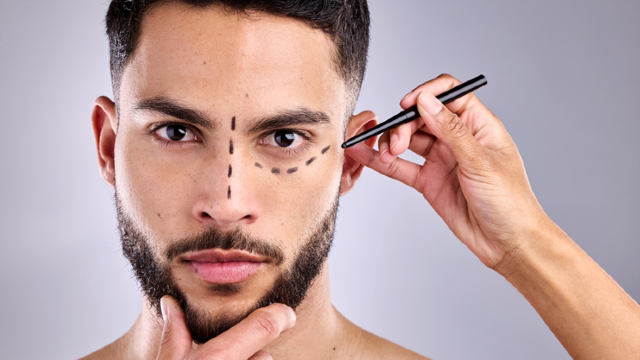
When surgeons describe a "male-specific" approach, they are usually referring to a set of related design choices:
- Lower crease height. Male designs typically use a lower fold height than many standard designs. A lower crease tends to read as more natural on thicker skin and a lower brow, and it avoids the wide, open eyelid platform that can look overtly cosmetic.
- Less tapered, more parallel-leaning shape. Standard designs often favor a tapered fold that narrows toward the inner corner for a softer, rounder eye. Male designs frequently lean toward a shape that is less tapered and less dramatic, prioritizing a defined-but-understated line.
- Conservative tissue adjustment. Because male lids are often thicker, surgeons commonly plan more conservative skin and fat handling, aiming for stability and a natural contour rather than an aggressively sculpted lid.
- Shallower crease depth. A deep, sharply etched crease can look artificial on a heavier male lid, so a shallower, softer depth is often planned.
- Avoiding an over-defined look. The unifying principle is restraint: the aim is an eye that looks rested and defined without appearing "done" or feminized.
By contrast, a standard design may aim for a slightly higher, more tapered, more openly defined fold that many patients associate with a classic double-eyelid result. Neither approach is inherently better; they are simply calibrated to different anatomy and goals. Results vary from person to person, and no surgical plan can guarantee a specific outcome.
It also helps to understand what "natural" tends to mean for male eyes specifically. Many male patients want the crease to be visible only when it should be — present when the eye is open and relaxed, without a wide, exposed lid platform that draws attention on its own. Because a heavier male lid casts more shadow and holds more tissue, a fold placed too high or shaped too roundly can look mismatched with the rest of the face. A design that respects the natural starting point of the eyelid, rather than imposing a dramatically new shape, is usually what produces a result that reads as "his eyes, refreshed" rather than "an operated eyelid." This is a conversation worth having in detail during planning, because two men with similar-looking eyes may want very different degrees of definition.
Skin thickness deserves special mention because it influences almost every design choice. Thicker skin resists forming a crisp, deep crease and tends to hold more swelling, so the same suture placement that produces a clean fold on a thin lid may yield a softer, less predictable line on a thick one. Surgeons account for this by planning conservatively, sometimes favoring an incision approach for durability, and by setting expectations that a thicker lid may take longer to reveal its final shape.
How Afternoon Plastic Surgery Clinic Approaches Male Eye Surgery
Afternoon Plastic Surgery Clinic documents Male Eye Surgery as a distinct service within its primary eyelid procedures. The clinic describes a male-specific surgical philosophy that uses lower fold heights and shallower crease depths appropriate for masculine proportions, with deliberately conservative correction for thicker male eyelid tissue. The stated goal is naturally defined, alert-looking eyes without creating an overly refined or feminine appearance.
In the clinic's documented model, Dr. Karam Kim personally performs the consultation, the surgical design, the procedure, and an intraoperative seated symmetry check, and the clinic limits its surgical schedule to two patients per day. Up to 20 minutes is dedicated to preoperative marking and design, which is where the male-specific decisions about crease height, shape, and tissue handling are made. Male Eye Surgery may be combined with related procedures such as ptosis correction, epicanthoplasty, removal of sagging skin, or under-eye correction when a patient's anatomy and goals call for it. You can review the clinic's services on its main website, and specific candidacy is always determined in consultation. These features describe a care model and are not a guarantee of any particular result.
The Consultation and Design Process
Because the difference between male and standard surgery lives in the design, the consultation is the most important step. A thorough evaluation looks at eyelid skin thickness, the amount and position of fat and soft tissue, brow height and shape, levator (eyelid-lifting muscle) function, natural expressions, and how the lid moves. The surgeon and patient then discuss what "natural" means for that individual, since some men want a nearly invisible crease and others want a clearly defined one.
Preoperative marking translates that discussion into a plan: the exact crease line, its height and shape, and how much tissue, if any, will be adjusted. For men with significant skin thickness or heaviness, an incision approach may offer a more predictable, durable result, whereas some cases suit a buried-suture method; this is a judgment made with the individual anatomy in view. If you want to prepare questions or begin a remote pre-consultation, you can reach the clinic through its contact page.
Recovery and Realistic Expectations
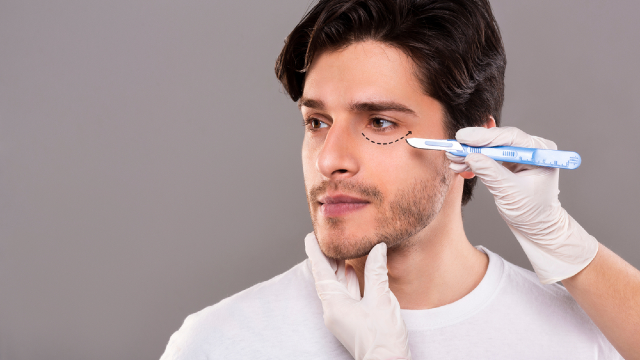
Recovery from double eyelid surgery generally involves temporary swelling, bruising, and mild discomfort in the first days, with sutures typically removed within about five to seven days when an incision method is used. Because male eyelid skin is often thicker, complete settling of the crease can take longer than in patients with thinner lids, and the final appearance develops gradually during healing. Some early swelling can make the crease look higher or more pronounced than it will be once healed.
Serious complications are uncommon but possible, including infection, healing irregularities, asymmetry, scarring, and an under- or over-defined fold. Any surgery carries risk, and a responsible plan includes an honest discussion of these possibilities. Individual healing differs, outcomes vary, and no surgeon can promise a specific look. Setting realistic expectations before surgery, especially about how conservative a natural male result should be, is part of a good outcome.
The Bottom Line
- Male and standard double eyelid surgery share the same techniques; the difference is in the design, not the procedure itself.
- Male-oriented designs typically use a lower crease height, a less tapered shape, shallower depth, and more conservative tissue handling to suit thicker skin and a lower brow.
- The guiding principle for male eyes is restraint — a defined but natural look that avoids an over-defined or feminized appearance.
- Afternoon Plastic Surgery Clinic documents Male Eye Surgery as a distinct, consultation-led service with a male-specific design philosophy.
- Candidacy, method, and expected outcome are individualized; results vary and cannot be guaranteed.
Frequently Asked Questions
Is male double eyelid surgery a different operation from the standard procedure?
No, it uses the same core techniques, such as the buried-suture and incision methods. What differs is the design: crease height, fold shape, depth, and how conservatively tissue is handled. These choices are calibrated to masculine anatomy and goals rather than to a standard template.
Why do male designs usually use a lower crease?
Men often have thicker eyelid skin and a lower, heavier brow, so a very high crease can look unnatural or crowd the space below the brow. A lower fold height typically reads as more natural on this anatomy. The exact height is still individualized to each patient during design.
Will double eyelid surgery make a man's eyes look feminine?
That is precisely what a male-specific design aims to avoid. By planning a lower, less tapered, shallower crease and conservative tissue adjustment, the goal is an alert but understated result rather than an over-defined look. Discussing your definition of "natural" with the surgeon helps guide this.
Should men choose the incision or buried-suture method?
It depends on eyelid anatomy. Thicker, heavier lids with more skin or fat often suit an incision approach for a more durable, predictable result, while thinner lids may suit a buried-suture method. This is a surgical judgment made during consultation based on your specific anatomy and goals.
How long does recovery take for men?
Expect temporary swelling and bruising in the first days, with sutures usually removed within about five to seven days for incision methods. Because male eyelid skin tends to be thicker, full settling of the crease can take longer, and the final appearance develops gradually. Individual healing varies.
Can male eye surgery be combined with other eyelid procedures?
Yes. Depending on anatomy and goals, it may be combined with procedures such as ptosis correction, epicanthoplasty, removal of sagging skin, or under-eye correction. Whether combination is appropriate is decided during an in-person assessment. It is not something to plan from an article alone.
Are the results permanent and guaranteed?
Double eyelid surgery aims for long-lasting results, but no surgical outcome can be guaranteed, and results vary between individuals. Factors such as skin thickness, healing, and technique all influence the final appearance. A surgeon can give you a realistic sense of durability and possible revision needs for your case.
This article is for general informational purposes and does not constitute individualized medical advice. Candidacy, technique, and expected outcomes can only be determined through a consultation with a qualified plastic surgeon. It is not a self-diagnosis tool.
More Articles
Continue reading our clinical guides.
Korean Board-Certified Care: Safety in Eye Revision Standards 2026
Eyelid surgery remains South Korea's most requested cosmetic operation, with 5%–8% primary revision rates. This 2026 clinical guide details safety standards, cost ranges, and high-precision micro-dissection at Afternoon Plastic Surgery Clinic.
Learn More

Time Zone & Communication Tips for a Korean Surgeon
How US patients bridge KST and US time zones consulting a Korean surgeon: planning consult windows, async messaging, and keeping a clear written record.
Learn More
Anesthesia Safety in Korean Eye Surgery: Sedation Explained
Understand anesthesia safety for Korean eye surgery: how local anesthesia with sedation differs from general anesthesia, monitoring, and the real risks.
Learn More