Gangnam Eye & Eye Revision Surgery Specialist · Personalized 1:1 Care


Medical Guide
Sausage Eye vs Overlapping Fold: Two Revision Problems
Sausage eye vs overlapping fold correction: two different eyelid revision problems, their likely causes, how repairs differ, and realistic expectations.
Schedule a ConsultationSausage Eye vs Overlapping Fold Correction: Two Different Revision Problems
Medically reviewed by Dr. Karam Kim, Korean Board-Certified Plastic Surgeon
"Sausage eye" and overlapping folds are two of the more common reasons people seek double eyelid revision, and although they can look superficially similar in the mirror, they are distinct problems with different causes and different repairs. A sausage eye is a thick, puffy, unnaturally full fold along the eyelid; overlapping folds are multiple stacked or layered creases where there should be a single, clean line. This article explains what tends to cause each, how the surgical approaches differ, who might be a candidate, and what expectations are realistic. It is educational only, not a way to diagnose yourself.
What "Sausage Eye" Actually Means
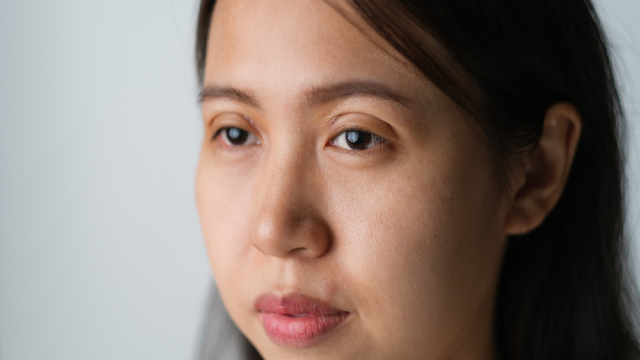
"Sausage eye" is a descriptive, informal term for an eyelid fold that looks thick, swollen, or bulging, often with a heavy, sausage-like segment of tissue between the eyelash line and the double eyelid crease. Instead of a smooth, gently tapered crease, the eyelid appears puffy and full, and the eye can look smaller, heavier, or more tired than intended. It is most often seen after a previous double eyelid surgery rather than as a naturally occurring feature.
Several underlying causes can produce this appearance, and they frequently occur in combination. A crease that was set too high can leave a thick roll of tissue below it. Excessive adhesion or scarring from the earlier surgery can bind tissues together in a way that creates a bulky fold. Inadequate or incomplete ptosis correction can leave the eyelid margin sitting low while the fold above it looks overstuffed. In some cases the upper eyelid simply carries too much tissue relative to its structure, or lacks the fat volume needed for a smooth contour. Because the puffiness is a visible symptom rather than a single fixed defect, identifying the specific cause is the essential first step.
What Overlapping Folds Look Like
Overlapping folds, sometimes called multiple folds or layered creases, describe an eyelid that shows more than one crease line where a single clean fold was intended. Rather than one defined double eyelid line, the lid displays two or more irregular creases stacked above one another, which can look confusing, uneven, and unnatural, and can differ noticeably between the two eyes.
This pattern typically develops after double eyelid surgery or epicanthoplasty and can be stubborn, sometimes recurring even after a first revision attempt. Common contributors include excessive scar tissue and adhesions, thinning of the eyelid skin, loss of tissue volume, a fixation point placed too high, and incomplete release of adhesions during a previous operation. In other words, overlapping folds are frequently a structural problem: the tissues have healed into a configuration that produces extra lines, and simply drawing a new crease over the top rarely resolves it.
How the Two Problems Differ
The most useful way to separate the two is to focus on the core complaint. A sausage eye is primarily a problem of thickness and puffiness, an eyelid fold that is too bulky and full. Overlapping folds are primarily a problem of multiplicity, too many crease lines where there should be one. A patient can, of course, have features of both at once, which is one reason self-assessment is unreliable and an in-person evaluation matters.
Because the problems differ, the goals of correction differ too. Sausage eye correction aims to reduce bulk and restore a smooth, naturally tapered contour. Overlapping fold correction aims to eliminate the extra creases and reconstruct a single, naturally positioned fold. Both are revision surgeries, meaning they take place on tissue that has already been operated on, so both carry the added complexity of scar tissue and altered anatomy compared with a first-time procedure.
It also helps to think about what each problem is not. A sausage eye is not simply a case of having "too high" a crease in every instance, and overlapping folds are not always the result of a poorly drawn line; both can arise even after technically reasonable surgery, because healing is individual and tissues do not always settle as planned. This is part of why an experienced surgeon spends time on diagnosis rather than assuming the cause from the appearance alone. The same visible feature can point to different underlying mechanisms in different people, and the right operation depends on which mechanism is actually at work.
How Sausage Eye Correction Is Approached
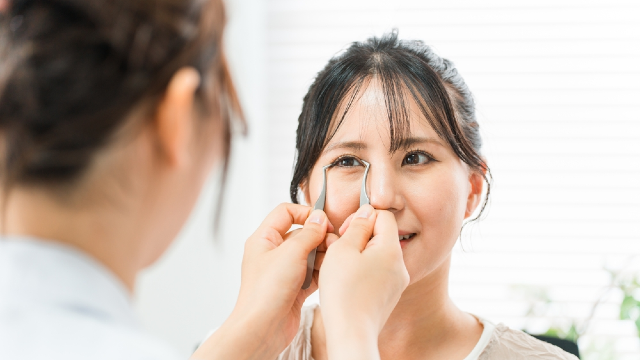
Because a sausage eye can stem from several different causes, correction is planned around the specific cause rather than applied as a single standardized technique. Evaluation looks closely at eyelid anatomy, fold height, the degree of tissue adhesion, skin volume, and eyelid margin position, with the aim of understanding why the fold looks thick before deciding how to treat it.
Depending on what that evaluation finds, treatment may involve lowering an overly high eyelid line, releasing adhesions that are creating bulk, revising a previous ptosis correction so the eyelid margin sits appropriately, restoring volume with fat grafting where tissue is deficient, or combining several of these steps. The point of a cause-based approach is that two patients with the same "sausage" appearance may need different operations, so the plan follows the diagnosis rather than the label. As with any eyelid surgery, individual healing and outcomes vary, and no specific result can be guaranteed.
How Overlapping Fold Correction Is Approached
Overlapping fold correction is generally a more structural undertaking because the extra creases usually reflect scarring and adhesions from prior surgery. A common approach is to fully release the adhesions responsible for the extra lines, remove problematic scar tissue, reposition the fixation point, and reconstruct a single, naturally placed eyelid crease. Where previous scarring is significant, this can be more involved and may require a longer stabilization period.
When tissue has thinned or volume has been lost, restoring structural support becomes part of the plan. Fat grafting, filler in selected situations, or blepharoplasty techniques may be incorporated to give the reconstructed fold a stable foundation and to reduce the chance of the layered creases returning. Complete release of the adhesions that created the overlapping lines is typically central to reducing recurrence, though as with all revision surgery, results depend on individual anatomy, the extent of previous scarring, and how each person heals.
Candidacy and Realistic Expectations
For a sausage eye, potential candidates include people with thick or puffy folds after double eyelid surgery, an excessively high crease, excessive tissue adhesion, inadequate prior ptosis correction, insufficient upper eyelid fat, or general dissatisfaction with a previous result. For overlapping folds, potential candidates include people with multiple irregular creases after double eyelid surgery or epicanthoplasty, persistent or recurrent layered folds after a prior revision, excessive adhesions, thinning skin, volume loss, or a crease set too high. These are general descriptions, not a checklist for diagnosing yourself.
Timing matters for both. After an initial eyelid surgery, it is generally recommended to wait roughly six months to a year before undergoing revision, allowing healing to stabilize so the surgeon can assess the tissue accurately. Realistic expectations are equally important: revision surgery can meaningfully improve thickness, puffiness, and multiple creases, but it works with tissue that has already been altered, so perfect symmetry cannot be promised and individual outcomes vary. A candid conversation about what is achievable is part of good surgical planning. If you are weighing a revision, you can discuss your specific situation through the clinic's contact page, and you can learn more about the clinic's approach on the Afternoon Plastic Surgery Clinic website.
Recovery and What to Expect After Revision
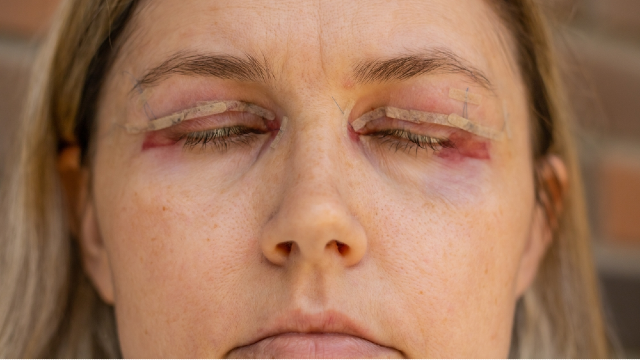
Recovery from either revision follows the general pattern of eyelid surgery, though revision on scarred tissue can take longer to settle than a first-time procedure. Expect swelling and bruising in the early days, along with mild discomfort that is usually manageable. Sutures are typically removed within about a week, and many patients are presentable for everyday activities before the eyelid has fully settled into its final shape.
The most important thing to understand is that the true result reveals itself gradually. Swelling can mask the outcome for weeks, and fine contour and symmetry may continue to refine over several months, particularly where significant scar tissue was released. Because of this, resist judging the result too early, and follow your surgeon's aftercare instructions on activity, wound care, and follow-up. Possible side effects include temporary swelling, bruising, infection, healing irregularities, and, in patients with heavy previous scarring, a longer stabilization period; serious complications are uncommon but remain possible with any surgery. For patients traveling from abroad, clarify in advance how follow-up will be handled once you return home, since the settling phase extends well beyond a typical trip.
The Bottom Line
- A sausage eye is a thick, puffy, unnaturally full fold; overlapping folds are multiple stacked creases where a single clean line should be.
- Sausage eye causes often include a crease set too high, excessive adhesion, incomplete ptosis correction, or insufficient volume; overlapping folds usually reflect scar tissue, adhesions, thinning, or a high fixation point.
- Sausage eye correction focuses on reducing bulk and restoring a smooth contour; overlapping fold correction focuses on releasing adhesions and rebuilding a single fold.
- Both are revision procedures on previously operated tissue, so a cause-first diagnosis and a wait of roughly six months to a year after prior surgery are typically advised.
- Results vary, symmetry cannot be guaranteed, and only an in-person evaluation can determine which problem you have and whether surgery is appropriate.
Frequently Asked Questions
Can I have both a sausage eye and overlapping folds at once?
Yes. The two problems can coexist, since both often follow previous eyelid surgery and can share underlying causes such as scarring and a crease set too high. That overlap is one reason self-diagnosis is unreliable. An in-person evaluation is needed to sort out which features are present and how to prioritize them.
How long should I wait after my first surgery before a revision?
For both sausage eye and overlapping fold correction, it is generally recommended to wait roughly six months to a year after the initial eyelid surgery. This waiting period allows swelling to resolve and the tissues to stabilize, so the surgeon can accurately assess the anatomy and the underlying cause before planning a revision.
Why can't the surgeon just draw a new crease over the old one?
Because both problems are usually rooted in the underlying tissue rather than the surface line. A sausage eye reflects bulk from adhesions, crease height, or volume issues, and overlapping folds reflect scar tissue and incomplete adhesion release. Adding a new line without addressing the cause tends to leave the original problem, or recreate it.
Is overlapping fold correction more complex than sausage eye correction?
It often involves significant structural work, because the extra creases usually come from scarring and adhesions that must be fully released before a single fold can be rebuilt. Where scarring is extensive, stabilization can take longer. That said, sausage eye correction can also be complex depending on its cause, so complexity is determined case by case.
Will revision surgery make my eyes perfectly symmetrical?
No procedure can promise perfect symmetry, especially in revision surgery performed on tissue that has already been altered. Revision can meaningfully improve thickness, puffiness, and multiple creases, but individual healing and anatomy influence the result. A realistic discussion of what is achievable is an essential part of planning any eyelid revision.
How do I know which problem I actually have?
You may recognize general patterns, but only an in-person examination can determine the diagnosis. A surgeon assesses fold height, adhesions, skin and fat volume, eyelid margin position, and the extent of previous scarring to identify the cause. This article is educational and is not a self-diagnosis tool; a consultation is the only way to know for certain.
This article is for general informational purposes and does not constitute individualized medical advice. Surgical candidacy, technique, and expected outcomes can only be determined through a consultation with a qualified plastic surgeon. It is not a self-diagnosis tool.
More Articles
Continue reading our clinical guides.
Korean Board-Certified Care: Safety in Eye Revision Standards 2026
Eyelid surgery remains South Korea's most requested cosmetic operation, with 5%–8% primary revision rates. This 2026 clinical guide details safety standards, cost ranges, and high-precision micro-dissection at Afternoon Plastic Surgery Clinic.
Learn More

Time Zone & Communication Tips for a Korean Surgeon
How US patients bridge KST and US time zones consulting a Korean surgeon: planning consult windows, async messaging, and keeping a clear written record.
Learn More
Anesthesia Safety in Korean Eye Surgery: Sedation Explained
Understand anesthesia safety for Korean eye surgery: how local anesthesia with sedation differs from general anesthesia, monitoring, and the real risks.
Learn More