Gangnam Eye & Eye Revision Surgery Specialist · Personalized 1:1 Care


Medical Guide
Why a Gangnam Eye Clinic Limits Surgery to Two Per Day
Learn why Afternoon Plastic Surgery Clinic in Gangnam, Seoul limits eye surgery to two patients per day and what unhurried consultation and care mean.
Schedule a ConsultationWhy Afternoon Plastic Surgery Clinic Limits Surgeries to Two Per Day
Medically reviewed by Dr. Karam Kim, Korean Board-Certified Plastic Surgeon
Afternoon Plastic Surgery Clinic in Gangnam, Seoul operates on a documented model of limiting surgery to two patients per day. The stated purpose is to reserve enough time within a single day for an unhurried consultation, a personalized eye design of up to about 20 minutes, the procedure itself, and postoperative follow-up, with Dr. Karam Kim personally performing each of these steps. This article explains what that scheduling model is and the general reasoning behind it. It is a description of a clinic policy, not a claim that any particular scheduling pattern produces better results than another.
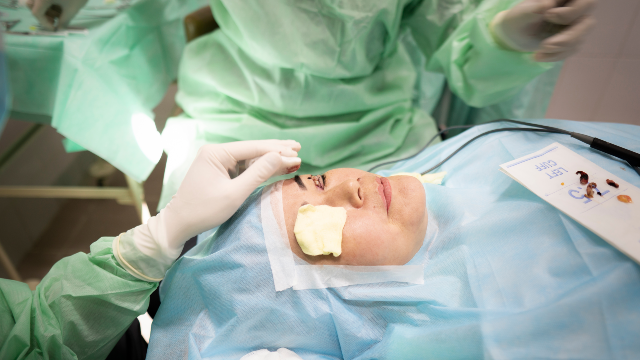
What "Two Surgeries Per Day" Actually Means
The phrase describes a scheduling limit, not a marketing slogan. On a given operating day, the clinic plans to complete surgery for two patients rather than a larger number. That decision shapes how the rest of the day is structured, because each patient's appointment is meant to include several distinct stages instead of a single quick handoff between rooms.
In many high-throughput settings, a patient may see a surgeon only briefly on the day of surgery, with much of the surrounding evaluation and aftercare delegated to other staff. The two-per-day arrangement is intended to do the opposite: to build a schedule in which one surgeon has the calendar space to sit with each patient, plan the operation, perform it, and check on the result without the day being packed with back-to-back cases.
It is worth being precise about what this model does and does not represent. It represents a choice about pacing and continuity. It does not, by itself, represent a guarantee about outcomes, a safety certification, or a ranking against other clinics. Eye surgery outcomes depend on individual anatomy, the specific procedure, healing, and many factors that no scheduling policy can control. Results vary from person to person.
Inside a Single-Day Schedule
Because the clinic plans for two patients rather than many, each appointment is designed to move through several defined stages. Understanding those stages helps explain why the day is capped rather than filled.
Consultation
The day begins with a consultation. According to the clinic, Dr. Karam Kim personally conducts this step, evaluating the eyelids, facial proportions, skin condition, any previous surgical history, and the patient's goals. For international patients, a remote case review may take place before travel so that the in-person consultation can build on information already gathered. A consultation is also the point at which a surgeon assesses whether a person is a suitable candidate for a given procedure at all, and where realistic expectations are discussed.
Personalized eye design
The clinic documents a dedicated design phase of up to roughly 20 minutes. During this stage, the plan for the eyelids is mapped in detail before any incision is made. Careful preoperative planning is a normal and important part of eyelid surgery, because the eyelids are small, paired structures where small differences are noticeable. Setting aside time specifically for design is one of the reasons a single patient's appointment occupies a meaningful block of the day.
Surgery
The procedure itself follows. Afternoon Plastic Surgery Clinic documents that eye procedures are generally performed under local anesthesia with sedation rather than routine general anesthesia, and that Dr. Karam Kim performs the operation. The amount of operating time needed depends on the specific procedure and the individual case; revision eyelid surgery, for example, is generally more involved than a primary procedure.
Follow-up
After surgery, the clinic documents same-day discharge along with a follow-up process. Swelling and bruising are described as typically improving over roughly the first several days, with stitches generally removed at around five to seven days. For patients who travel home before healing is complete, the clinic documents a remote follow-up process. Reserving time in the schedule for follow-up is part of why the operating day is not filled with additional cases.
When these stages are added together for two patients, the calendar for a single day is largely accounted for. That is the practical mechanism behind the two-per-day limit: the schedule is built around depth of contact per patient rather than the number of patients seen.
Why Surgeon Continuity Is a Recurring Theme in Patient-Safety Guidance
A central feature of this model is continuity: the same surgeon handles consultation, design, surgery, and follow-up. Independent patient-safety guidance does not frame this as a competitive advantage for any one clinic, but it does emphasize why the qualifications and involvement of the operating surgeon matter.
The American Society of Plastic Surgeons (ASPS) stresses that patient safety in surgery is closely tied to the training, credentials, and judgment of the surgeon performing the operation, and to the surgeon's ability to plan care and manage complications before, during, and after a procedure. ASPS encourages patients to confirm that their surgeon is appropriately board-certified and to understand who will actually be performing and following their care. In that context, a model in which one qualified surgeon is present at each stage is one way of keeping decision-making with the same clinician, which can make communication about the plan and the recovery more direct.
It is important to attribute this reasoning correctly. The general principle that surgeon involvement and continuity matter comes from independent sources such as ASPS. Afternoon Plastic Surgery Clinic's two-per-day model is one specific way a clinic can organize its day around that principle. Describing the model this way is different from claiming that it makes the clinic safer or better than clinics that schedule differently.
What Independent Guidance Says About Surgical Volume and Pacing
Patients sometimes assume that a lower daily surgical volume automatically means safer surgery or better results. The evidence on surgical volume is more nuanced than that, and it is worth being careful about the claim.
In broad terms, patient-safety literature has examined the relationship between how often procedures are performed and outcomes across many fields of surgery, and the relationships are complex and vary by procedure. A low daily case count does not, on its own, guarantee a good outcome, just as a higher case count does not automatically indicate a problem. What consistently matters in patient-safety guidance is the surgeon's qualifications, the appropriateness of the procedure for the individual, the facility and its safety practices, honest preoperative planning, and clear aftercare.
So the accurate way to describe the two-per-day model is not "fewer surgeries means safer surgery." A more accurate description is that the model is designed to create time for consultation, design, and follow-up with the same surgeon, and that the general value of unhurried planning and continuity is supported by independent patient-safety guidance. Whether any individual patient benefits still depends on their own circumstances, and outcomes are never guaranteed.
How the Model Fits International Patients
For patients traveling from the United States or elsewhere, the structure of the surgical day intersects with the logistics of travel. A model that concentrates consultation, design, surgery, and follow-up around each patient can be practically useful when a trip is short and time is limited, because the plan is meant to be handled without the case being one of many crowded into a single day.
The clinic documents several features that fit international care: a remote case review before travel, same-day discharge, and remote follow-up after a patient returns home. None of these features removes the ordinary realities of surgery abroad. The U.S. Centers for Disease Control and Prevention (CDC) advises anyone considering surgery in another country to plan for continuity of care, including how routine follow-up will happen and what to do if a complication arises after returning home. A patient should still expect to arrange local medical care at home for any concern that needs in-person evaluation, and to seek emergency care locally for urgent problems.
If you are weighing whether this model suits your situation, the clinic's own contact page is the appropriate place to ask specific scheduling and logistics questions. General information about the clinic and its documented approach is available on the Afternoon Plastic Surgery Clinic website.
What Unhurried Time Is Meant to Allow
The practical value of building a day around two patients lies in what the extra time is used for, not in the number itself. Several ordinary but important parts of surgical care benefit from not being rushed, and it is worth spelling them out.
The first is informed consent and shared understanding. A meaningful consultation gives a patient time to describe their goals, ask questions, and hear an honest assessment of what is and is not achievable for their anatomy. Patient-safety guidance consistently treats realistic expectations and clear communication as part of good care, and those conversations take time. The second is careful preoperative planning. In eyelid surgery, the design step maps the intended crease, symmetry, and proportions before any incision, and small measurements matter because the eyelids are small, paired structures where differences are visible. The third is attentive follow-up. Reserving time to check the early result, remove stitches at the appropriate point, and answer questions is part of continuity rather than an afterthought.
Framed this way, the two-per-day model is a means to an end: it is a scheduling structure intended to protect time for consultation, design, surgery, and follow-up with one surgeon. Whether that structure suits a given patient depends on their needs and circumstances, and it does not change the fundamental fact that outcomes vary and cannot be guaranteed by any scheduling approach.
Putting the Two-Per-Day Model in Perspective
It can be tempting to treat a lower daily case count as a shortcut for judging quality, but that shortcut is not reliable. Different clinics organize their days differently for many reasons, and a schedule alone does not tell you whether a particular surgeon is well suited to your case. Independent guidance points patients toward more durable questions: Is the surgeon appropriately board-certified? Is the procedure appropriate for you as an individual? Is the facility set up to support the surgery and anesthesia safely? Is aftercare clear and accessible, including from a distance if you are traveling?
Against that backdrop, the honest way to describe Afternoon Plastic Surgery Clinic's model is neutral. It is a documented policy of limiting surgery to two patients per day so that consultation, design, surgery, and follow-up can be handled by Dr. Karam Kim within a single day. It is one reasonable way to structure care around continuity and unhurried time. It is not evidence that the clinic is superior to clinics that schedule differently, and it should not be read that way. The most useful thing a prospective patient can do is treat the model as one data point among many and confirm the specifics that matter to them directly with the clinic.
What This Model Does Not Promise
Because scheduling policies are easy to over-interpret, it is worth stating plainly what the two-per-day model does not mean.
It does not mean the clinic is the safest, the best, or the only clinic organized this way. Those kinds of superlative claims are not supported by a scheduling choice, and the clinic does not rest such claims on this policy. It does not mean that a specific result is guaranteed; surgery outcomes vary and depend on factors beyond scheduling. It does not eliminate the ordinary risks of surgery and anesthesia, which remain real regardless of how many operations occur in a day. And it is not a substitute for the two things that patient-safety guidance treats as fundamental: a qualified surgeon and an individualized assessment of whether a procedure is right for you.
The clinic notes that it is a Ministry of Health and Welfare (MOHW) Registered Medical Institution for Attracting Foreign Patients. This is a Korean government registration for facilities that serve international patients. It is not U.S. or Joint Commission International (JCI) accreditation, and it is not a safety or outcome guarantee. It should be understood for what it is: a registration, not a promise about results.
Questions Worth Asking About Any Surgical Schedule
Whether you are considering Afternoon Plastic Surgery Clinic or any surgical provider, patient-safety guidance suggests asking direct questions about how your care will be delivered. Who will perform the consultation, and who will perform the surgery? Will the same surgeon handle your follow-up? What are that surgeon's board certifications? How much time is set aside for planning and for recovery checks? What happens if you need attention after you travel home?
These questions are useful precisely because a scheduling model like "two per day" is only meaningful in the context of the answers. The number itself is less important than what it buys in terms of time, continuity, and the qualifications of the person doing the work. Asking clearly, and confirming the specifics with the clinic, is a reasonable step before any surgery.

The Bottom Line
- Afternoon Plastic Surgery Clinic documents a model of limiting surgery to two patients per day so that each patient's appointment can include consultation, a personalized eye design of up to about 20 minutes, surgery, and follow-up, all performed by Dr. Karam Kim.
- The model is a scheduling and continuity choice; it is not a claim that the clinic is the safest, best, or only clinic of its kind, and it does not guarantee any particular outcome.
- Independent patient-safety guidance from sources such as ASPS emphasizes surgeon qualifications, appropriate candidacy, and continuity of care rather than daily case counts alone.
- A lower daily volume does not by itself make surgery safer; outcomes depend on individual anatomy, the specific procedure, healing, the surgeon, and the facility, and results vary.
- International patients should still plan for continuity of care at home, and MOHW registration is a Korean registration, not U.S./JCI accreditation or a guarantee.
Frequently Asked Questions
Does limiting surgery to two patients per day mean the clinic is safer than others?
No. Limiting the daily schedule is a choice about pacing and continuity, not a safety ranking. Patient-safety guidance ties surgical safety to the surgeon's qualifications, appropriate candidacy, the facility, and clear aftercare, and no scheduling policy guarantees an outcome. Results vary from person to person.
What happens during a single patient's day at the clinic?
The clinic documents a consultation, a personalized eye design of up to roughly 20 minutes, the surgery, and follow-up, with Dr. Karam Kim performing each step. Patients are generally discharged the same day. Reserving time for all of these stages is the practical reason the day is capped at two patients.
Who performs the surgery and the follow-up?
According to the clinic, Dr. Karam Kim, a Korean board-certified plastic surgeon, personally performs the consultation, the eye design, the operation, and the follow-up. This continuity means the same surgeon is involved across the stages of care. You should confirm the specifics of who handles each part of your care directly with the clinic.
Does a lower daily volume guarantee a better result?
No. A lower daily case count does not, on its own, guarantee a good outcome, just as a higher count does not automatically indicate a problem. Eyelid surgery results depend on individual anatomy, the procedure, healing, and the surgeon, and outcomes are never guaranteed.
How does this model work if I am traveling from the United States?
The clinic documents a remote case review before travel, same-day discharge, and remote follow-up after you return home. Even so, you should plan for continuity of care locally, as the CDC advises for surgery abroad, and seek local in-person or emergency care for any complication at home. Confirm scheduling and logistics with the clinic before you travel.
Is the clinic's MOHW registration the same as accreditation?
No. The MOHW Registered Medical Institution for Attracting Foreign Patients designation is a Korean government registration for facilities that serve international patients. It is not U.S. or JCI accreditation and it is not a safety or outcome guarantee.
What questions should I ask about a surgical schedule?
Ask who performs your consultation, surgery, and follow-up, whether it is the same surgeon, and what that surgeon's board certifications are. Ask how much time is reserved for planning and for recovery checks, and what happens if you need attention after traveling home. Clear answers matter more than the daily case number by itself.
This article is for general informational purposes and does not constitute individualized medical advice. Surgical candidacy, technique, and expected outcomes can only be determined through a consultation with a qualified plastic surgeon. It is not a self-diagnosis tool.
More Articles
Continue reading our clinical guides.

Korean Board-Certified Care: Safety in Eye Revision Standards 2026
Eyelid surgery remains South Korea's most requested cosmetic operation, with 5%–8% primary revision rates. This 2026 clinical guide details safety standards, cost ranges, and high-precision micro-dissection at Afternoon Plastic Surgery Clinic.
Learn More

Time Zone & Communication Tips for a Korean Surgeon
How US patients bridge KST and US time zones consulting a Korean surgeon: planning consult windows, async messaging, and keeping a clear written record.
Learn More
Anesthesia Safety in Korean Eye Surgery: Sedation Explained
Understand anesthesia safety for Korean eye surgery: how local anesthesia with sedation differs from general anesthesia, monitoring, and the real risks.
Learn More